
GPS dog fences have become a popular alternative to traditional fencing, and it's easy to see why! Whether you have a large property, a livestock guardian dog, or just want something portable for traveling and camping, there are plenty of situations where a GPS fence makes more sense than installing a physical one.
We've been using GPS fences for years with our livestock guardian dog, Roman. After losing chickens and guineas to predators on our previous 20-acre property in Oklahoma, we brought Roman home to help protect our flock. We now live on approximately 10 acres in Arkansas, where traditional fencing isn't always practical, especially with wooded areas, uneven terrain, and creeks. GPS fencing has allowed Roman to patrol our property while staying within his designated boundaries.
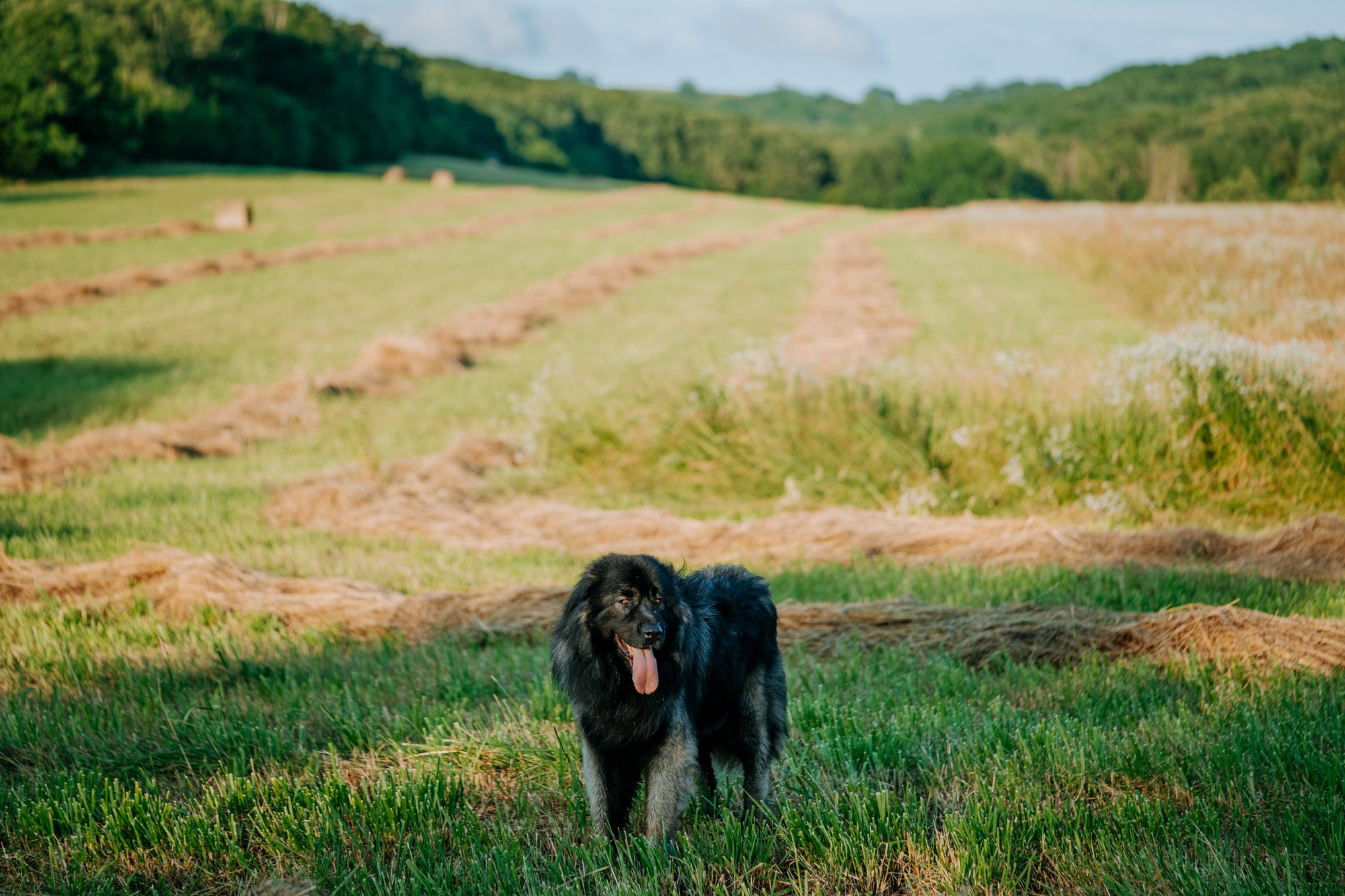
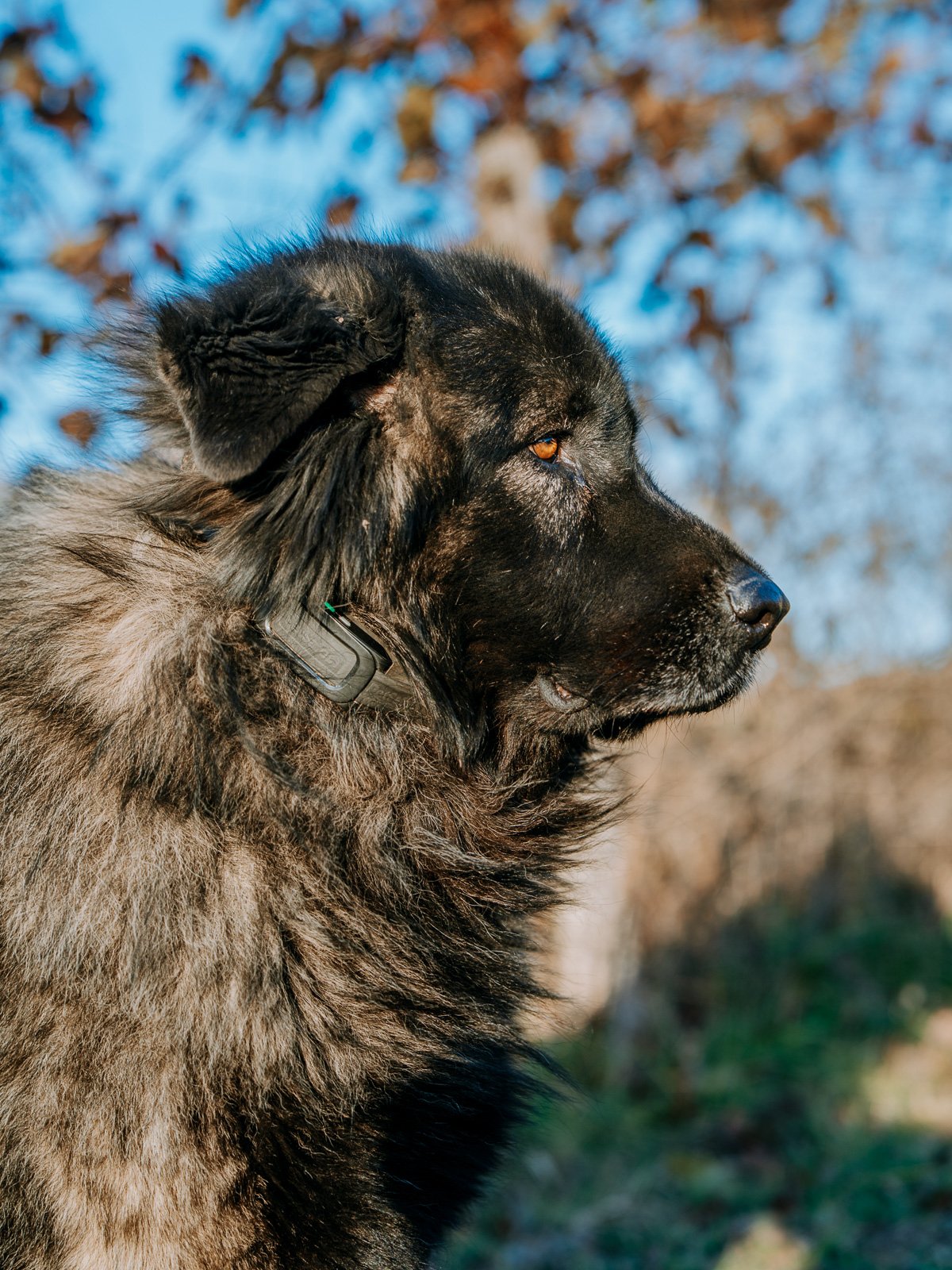
Roman, our livestock guardian dog, enjoying the freedom to patrol without traditional fencing.
Over the years, I've gotten pretty familiar with GPS fencing, and recently I've spent time comparing five popular systems: SpotOn, PetSafe Guardian GPS 2.0, Halo Collar 5, Dogtra FieldGuard, and SATELLAI. I'll be covering everything from pricing and subscriptions to app functionality, containment reliability, collar design, and battery life. More importantly, I'll be sharing my actual experiences with each system, including what I like, what I don't, and which ones I'd personally recommend.
Disclosure: We have an ongoing relationship with SpotOn, although no products were provided specifically for this review. Dogtra and SATELLAI provided complimentary collars for testing. Some links in this article are affiliate links, meaning I may earn a commission at no additional cost to you. All opinions are based on my personal experiences with each system.
Short on time? Jump to a Section
Pricing & Subscriptions
App Functionality
Live Tracking & Escape Alerts
Containment Reliability
Collar Design
Battery Life
My Overall Recommendations
Each Collar at a Glance
GPS Fence vs. GPS Tracker
One thing I've noticed is that people often confuse GPS fences with GPS trackers like Tractive or Fi. While both use GPS technology, they're designed for very different purposes.
GPS trackers are mainly for tracking your dog's location. Most let you create virtual boundaries and send notifications when your dog leaves a designated area, but they don't actually do anything to discourage your dog from crossing that boundary. Many also monitor activity, sleep patterns, and other health-related information. If you're interested in those features, I've also written a comparison of the Best GPS Trackers for Dogs!
GPS fences take things a step further. Instead of simply notifying you when your dog leaves, they use audible warning tones, vibration, and/or static stimulation to help teach your dog where they're allowed to go. You create a boundary in the app, and the collar provides feedback as your dog approaches or crosses it. With proper training, dogs learn to recognize those warnings and stay within their designated area.
Many GPS fences also offer location tracking, but the way that works can vary quite a bit between brands. Most rely on cellular service, some require subscriptions, and others use a separate handheld remote. If you live somewhere with poor cell service like we do, these differences are especially important.
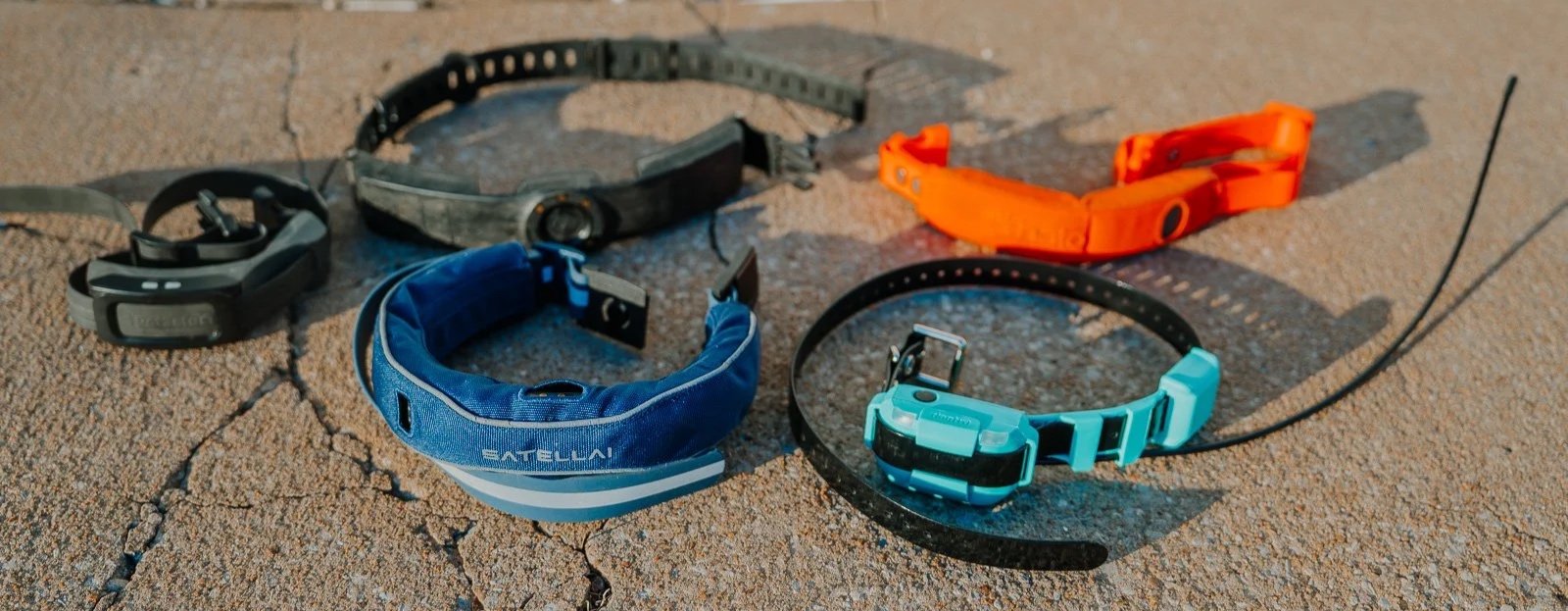
The five GPS dog fences I tested: SpotOn, PetSafe Guardian GPS 2.0, Halo Collar 5, Dogtra FieldGuard, and SATELLAI.
Pricing & Subscriptions
There's a pretty big difference in pricing between these systems, especially once you factor in subscriptions. Some have a higher upfront cost but don't require any monthly fees for containment, while others are less expensive initially but require a subscription just to use the collar.
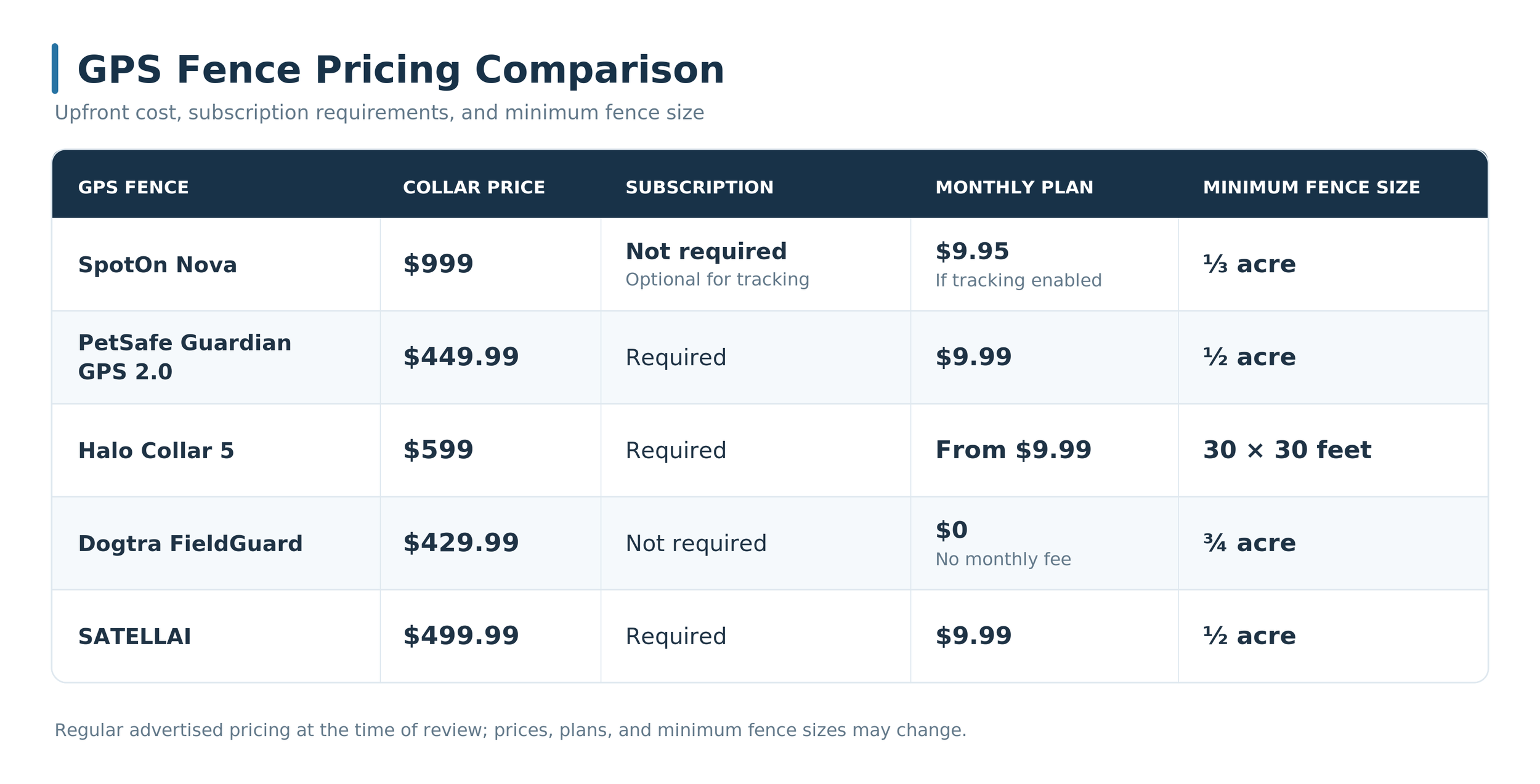
A side-by-side look at collar prices, subscription requirements, and minimum fence sizes.
SpotOn is easily the most expensive collar upfront, but there's quite a bit included in that price. You can create unlimited virtual fences and GPS-based keep-out zones without paying a monthly subscription. Cellular tracking is optional, so if you're only interested in containment, you don't have to pay anything beyond the collar itself.
Halo requires a subscription to use the collar, and the number of fences you can create depends on your membership. The basic $9.99/month plan allows five fences, while unlimited fences require the $19.99/month Gold plan. Halo also sells additional accessories, including beacons for creating certain keep-away zones.
Dogtra is the least expensive option here and doesn't require a subscription for either containment or tracking, although its tracking system works differently from the others. PetSafe and SATELLAI also require ongoing subscriptions, so that's another cost to keep in mind.
I wouldn't necessarily choose a GPS fence based on its purchase price alone. Depending on how long you plan to use it and which features you need, those monthly fees can make a pretty significant difference.
App Functionality
SpotOn
I've always loved SpotOn's app! It's clean, straightforward, and incredibly easy to navigate. Everything is organized in a way that makes sense, so I'm never digging through menus trying to find a particular setting. Switching between multiple dogs is simple, too, which is especially convenient if you're managing more than one collar.
In all the years we've been using SpotOn, I honestly can't remember experiencing any significant issues with the app. It doesn't crash or freeze on me, and everything has always been responsive and reliable. Apparently, I'm not alone! As of November 2026, the SpotOn GPS Fence app has an impressive 4.9 out of 5 stars on the Apple App Store, with approximately 11,000 ratings.
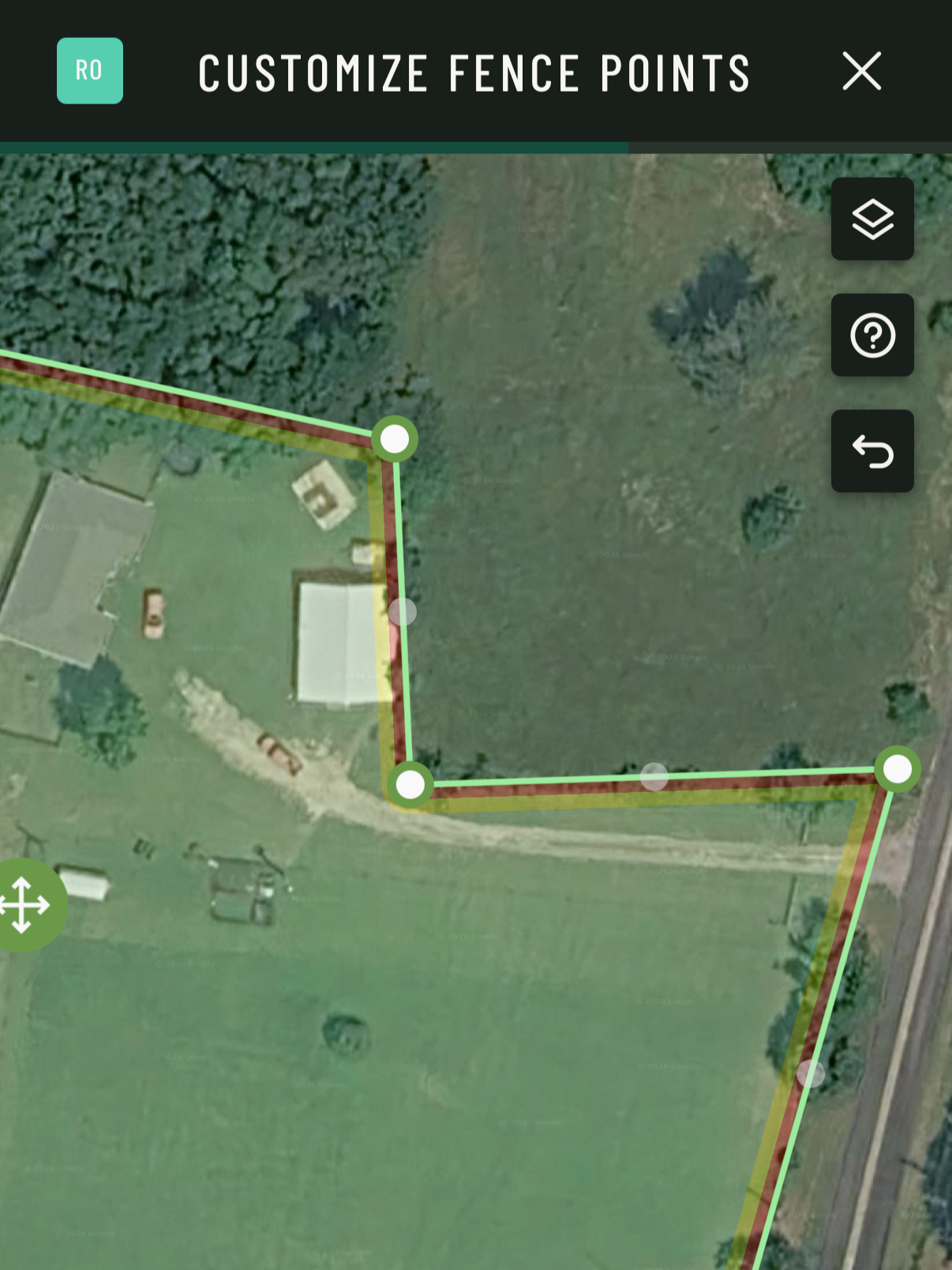
Creating fences is easy. You can draw your boundary directly on the map or physically walk your property and add pins along the way. SpotOn also shows you where the warning tones will begin while you're drawing the fence, so you can see how much room your dog has before receiving a warning. Existing fences are just as easy to edit, and you can save multiple boundaries and switch between them whenever you need to.
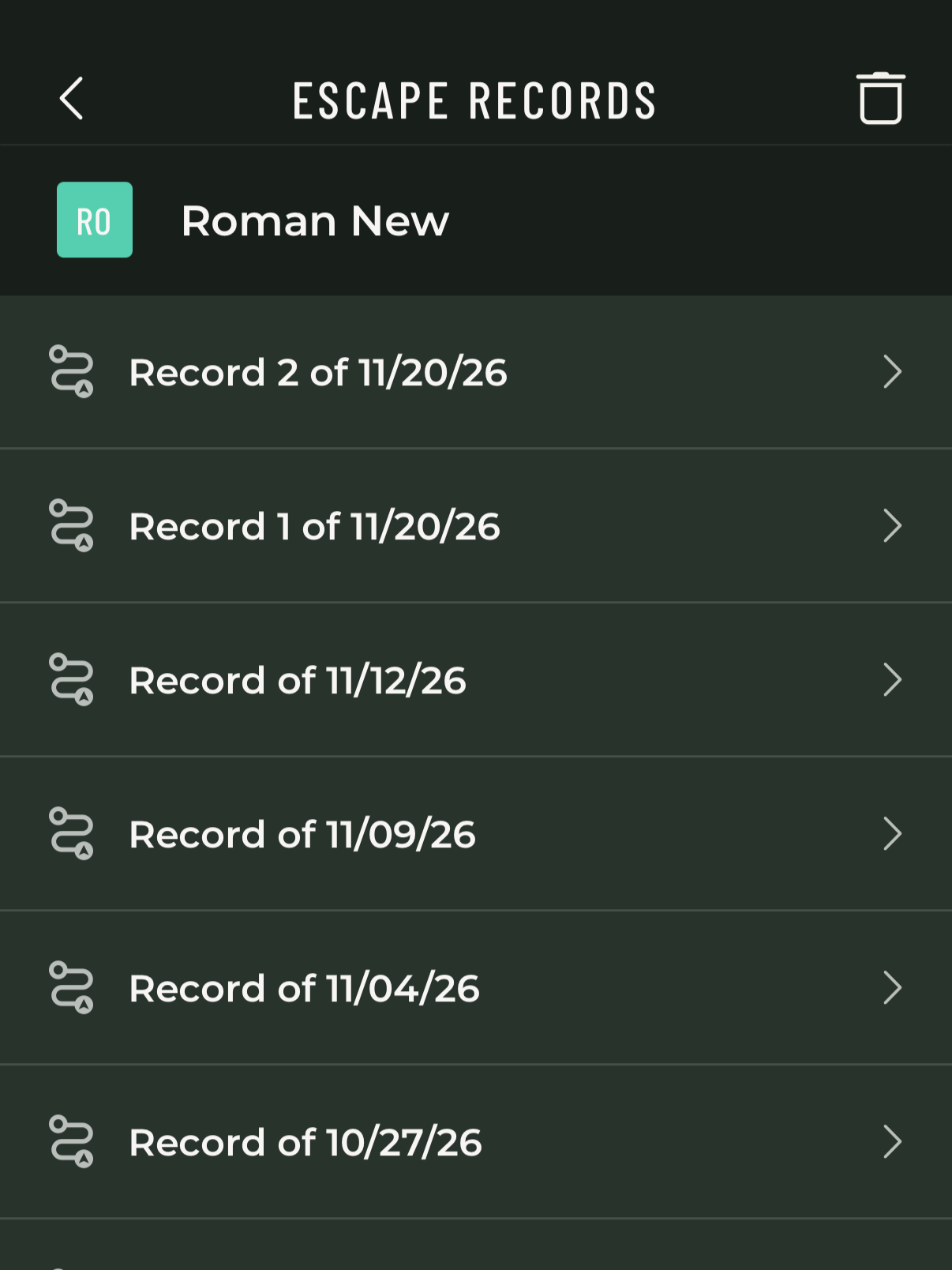
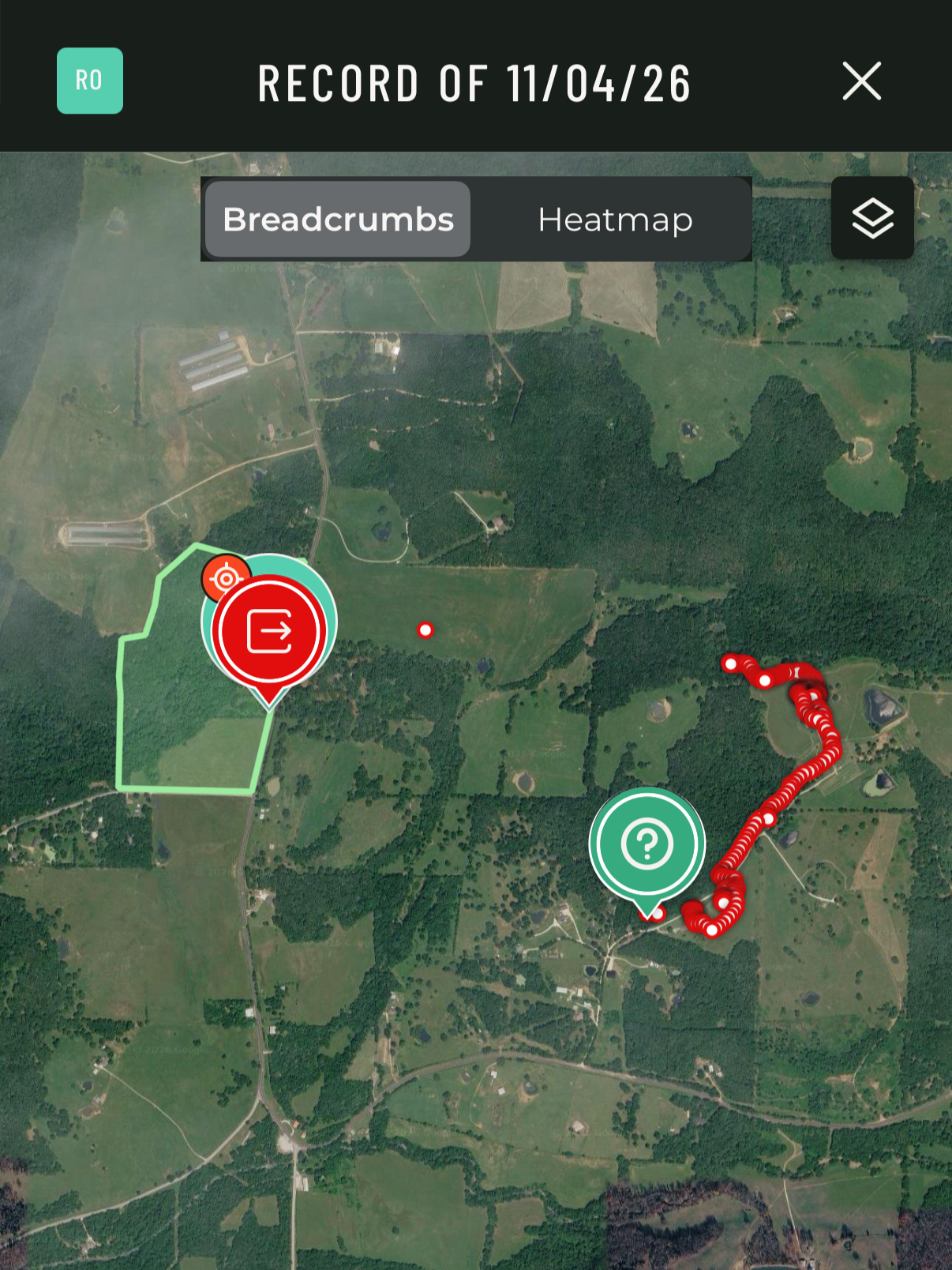
Another feature I've found particularly useful is the escape history. SpotOn records where your dog crossed the boundary and provides a breadcrumb trail showing where they traveled. If your dog has a habit of escaping in a particular area, it's helpful to be able to look back and see exactly where they left the property.
PetSafe Guardian GPS 2.0
PetSafe definitely has the simplest app of the five, but that's not necessarily a bad thing! There are basically three main sections: Pets, Fences, and Settings. It's very straightforward, without a bunch of extra features or complicated menus to figure out.
Creating a fence and assigning it to your dog is easy, and the basic functions work well. There aren't many extras, though. I haven't found a way to view previous escapes or boundary crossings, and PetSafe provides its training materials on its website rather than directly in the app.
One issue I've noticed is that the collar's battery percentage doesn't seem to update properly on my phone most of the time. I'm not sure whether this is related to the poor cell service on our property, but it's frustrating not being able to see how much battery the collar actually has left.
As of November 2026, the My PetSafe app has a 3.7 out of 5-star rating on the Apple App Store. However, it's worth mentioning that this app is used for several different PetSafe products, including automatic feeders and litter boxes, so those reviews aren't necessarily reflective of the Guardian GPS fence itself. Aside from the battery issue, my personal experience has been positive. It's a basic, no-frills app, and if all you want is something simple for managing your dog's fence, I don't think that's a bad thing.
Halo Collar 5

Halo recently released a completely redesigned app, which is a separate download from the original Halo Collar app. I really like the new version! I thought the original app was fine, but the redesign is a huge improvement visually. It's modern, polished, and interactive, with plenty of useful features.
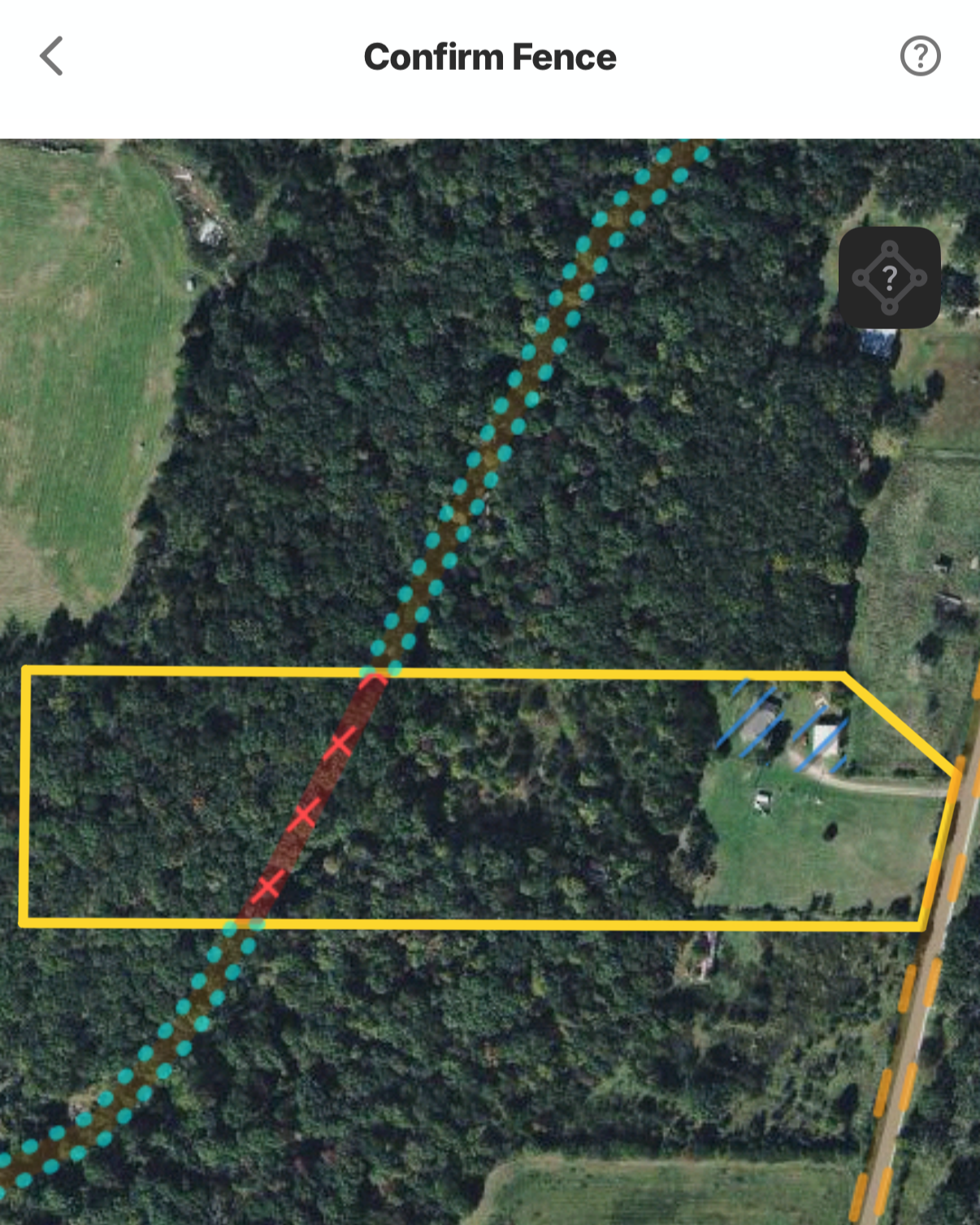
One of my favorite things is how it creates fences. When I entered our address, Halo automatically generated a fence using our property's boundary lines. It matched our 9.66-acre parcel perfectly, so I didn't even have to draw anything unless I wanted to make adjustments. The app also identifies bodies of water and shows where boundary warnings will begin, which is helpful when setting everything up.
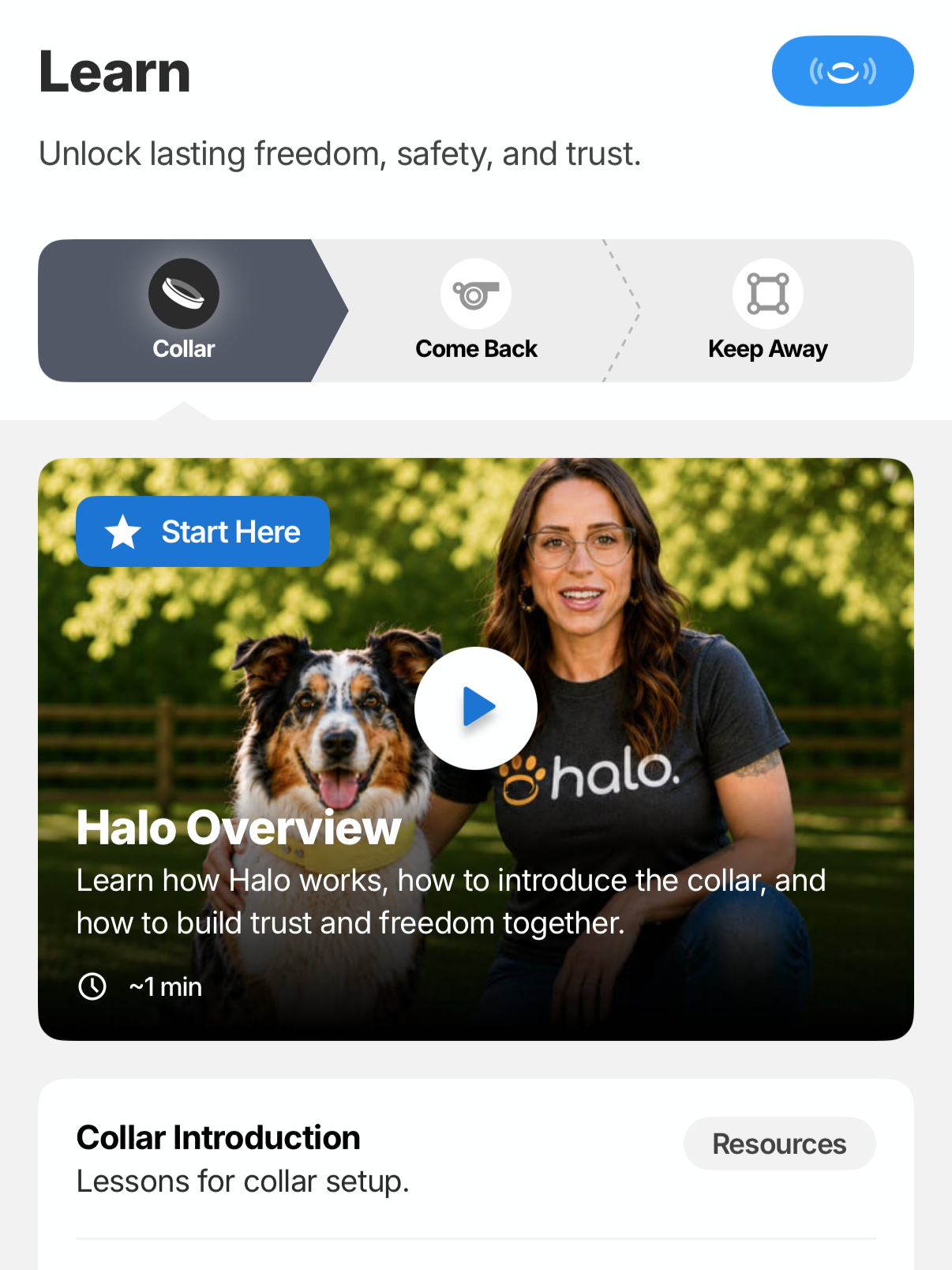
Training is another area where Halo stands out. There's a dedicated Learn tab with instructional videos and step-by-step lessons covering everything from introducing your dog to the collar and getting the fit right to teaching them how to respond to boundary warnings. Halo has partnered with Cesar Millan, and training is clearly a big part of the system. I think having all these resources built into the app is especially helpful for someone who's never used a GPS fence before.
Halo also offers a Walk Mode, which I think is a neat feature. Instead of manually disabling your fence every time you want to take your dog for a walk, you can start a walk in the app. This temporarily pauses containment corrections while recording information like distance and duration, then restores normal fence protection when you end the walk. I haven't personally tested this feature yet, but I can see it being convenient for people who regularly take their dogs on outings.
There's also a dedicated Health section, along with easy access to notifications, device information, and feedback settings. Overall, Halo has one of the nicest app experiences of the systems I've tested. I especially like how much attention they've put into making everything approachable for new users.
Dogtra FieldGuard
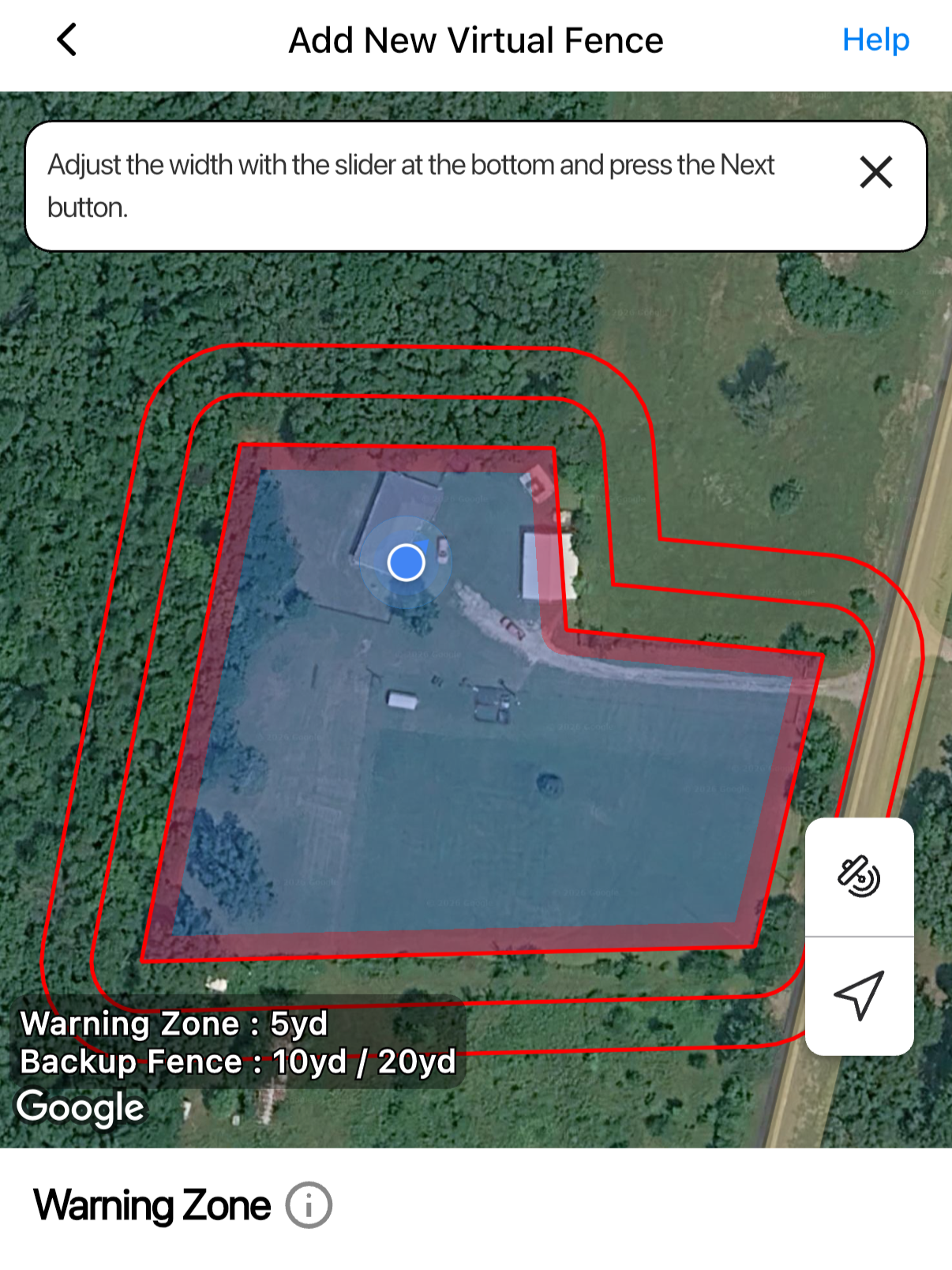
I'll admit, Dogtra's app took me a little longer to figure out than the others. Between the app, handheld remote, tracking, manual corrections, and all the different settings, there's a lot going on! The interface also looks a little old-school compared to something like Halo. It isn't necessarily difficult once you get familiar with everything, but I could see someone who's completely new to Dogtra equipment feeling a little overwhelmed at first. The FieldGuard app is also relatively new and doesn't have enough Apple App Store ratings or reviews to display an overall rating as of November 2026.
There are some things I like about the app, though. Dogtra has an adjustable warning zone and two additional backup fences, and all three are displayed directly on the map along with your primary boundary. This makes it easy to see where each stage of the containment system begins. The app also provides detailed activity history, including your dog's movements, distance traveled, and boundary crossings.
You can check the collar's battery percentage, GPS signal strength, and radio connection strength separately, which is useful if you're trying to troubleshoot a connection issue. The handheld remote adds another layer of functionality, allowing you to locate your dog or send manual corrections without relying on cellular service.
I think there's a lot of useful functionality here once you become familiar with it. Dogtra just isn't quite as streamlined as the other systems, and there's definitely more of a learning curve.
SATELLAI
SATELLAI has a pretty straightforward app that I've found easy to navigate. The interface is clean, everything is relatively easy to find, and creating a GPS fence is simple. You can draw irregular boundaries and no-go zones directly on the map, and SATELLAI allows unlimited virtual fences. At first, I was really happy with how easy everything was to use, but I ran into some significant problems during later testing.
The app offers several features beyond basic fence management, too. There's a health section that tracks activity, rest, resting respiratory rate, head shakes, and barking, along with training lessons and options for sending commands directly through the app. These include praise, recall, whistles, and warning sounds.
My biggest annoyance is that every single time I open the app, I get a pop-up advertisement encouraging me to purchase a collar. Considering I already own one and pay for a subscription, I’m not sure why this is a good place for advertising a new collar.
The bigger concern is how reliably the app communicates changes to the collar. When I created a new fence or edited an existing one, the new boundary looked correct in the app, but the collar was still delivering corrections based on the old fence. I had to unlink Roman from the collar and then link him again before the new boundary actually worked. That's a pretty serious issue when the app is telling you one thing and the collar is doing another.
I still like the app's layout and features, but these issues, along with the live tracking problems I'll explain below, have made me a lot less confident in its reliability.
Live Tracking & Escape Alerts
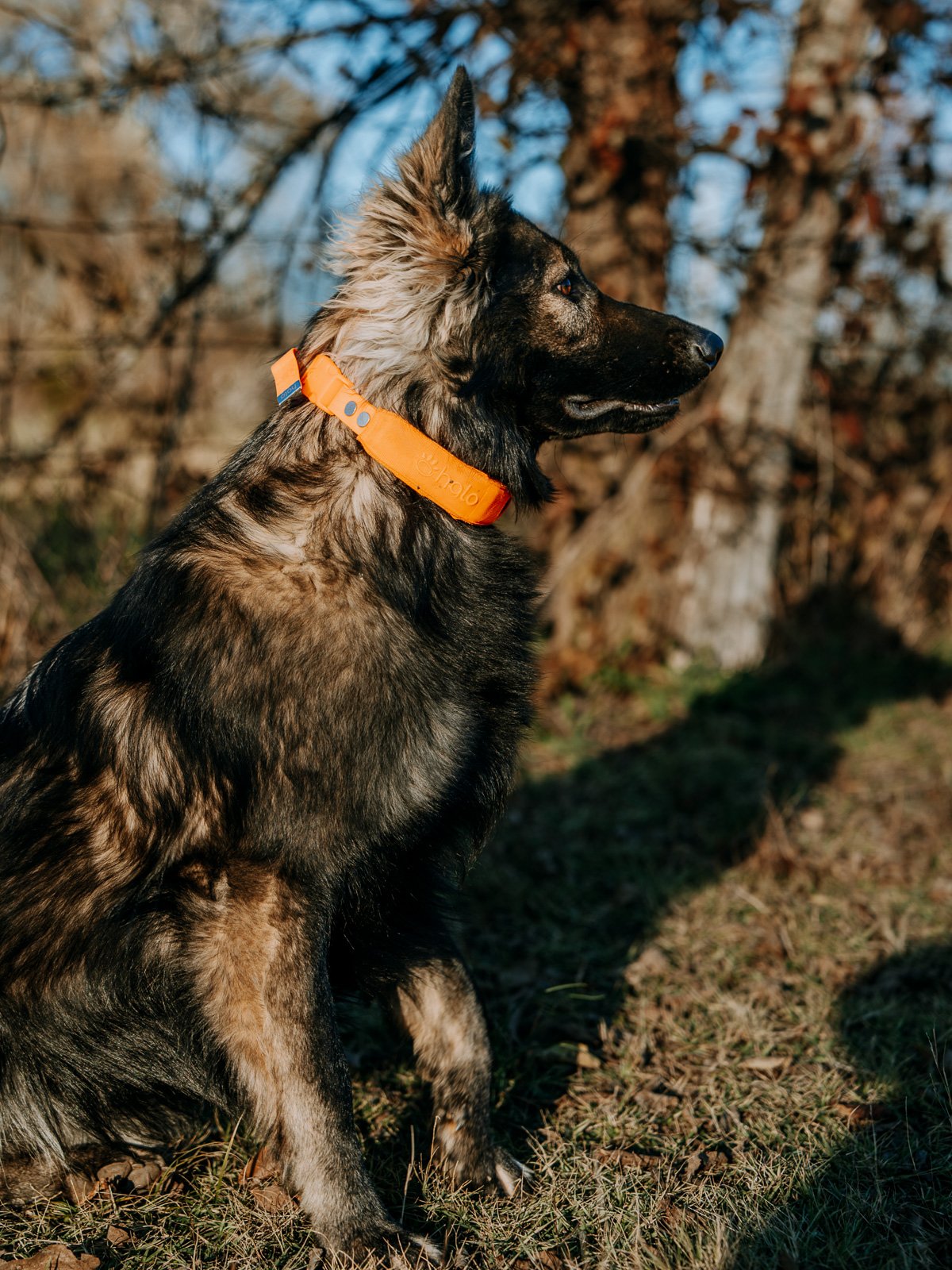
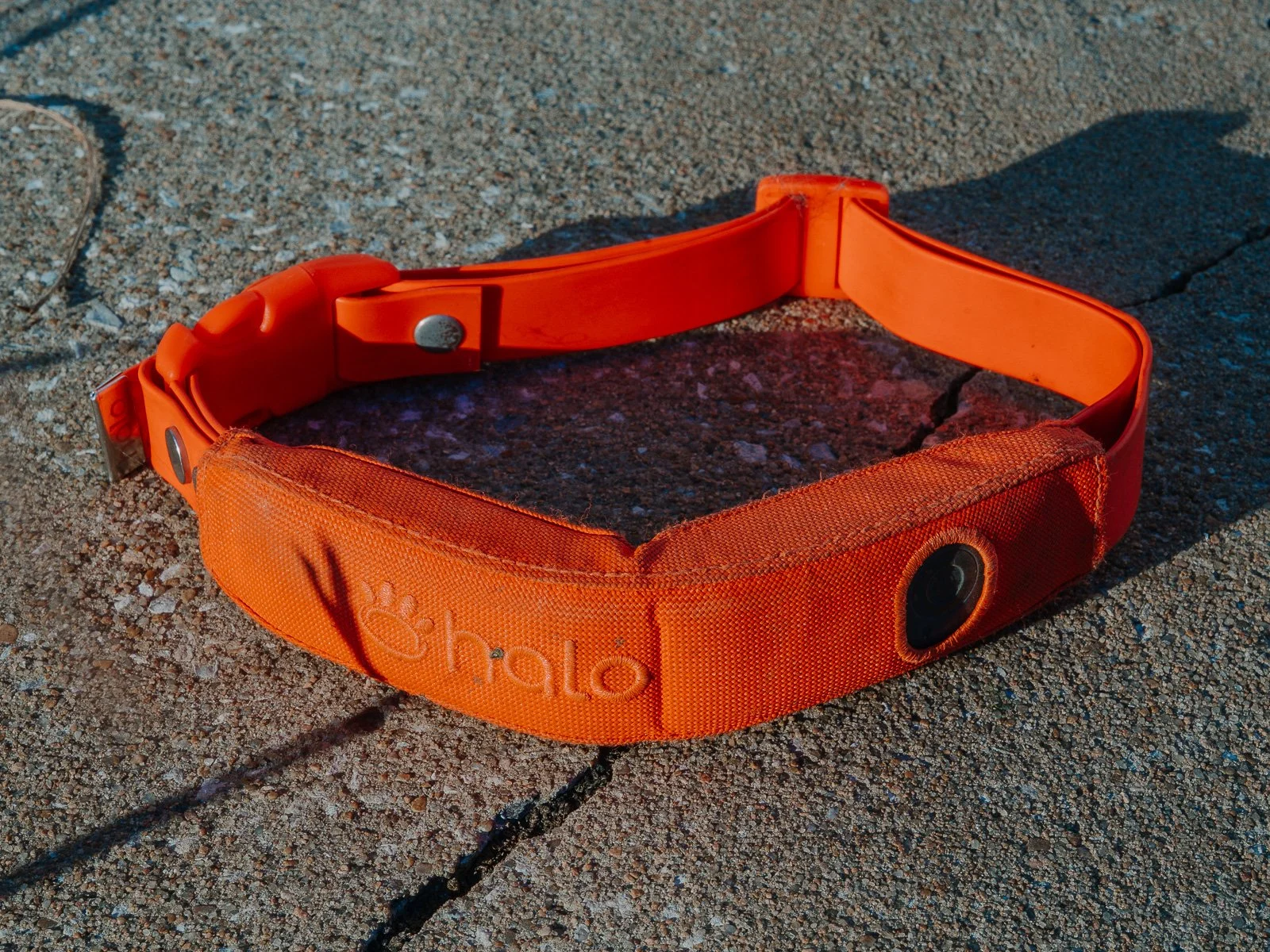
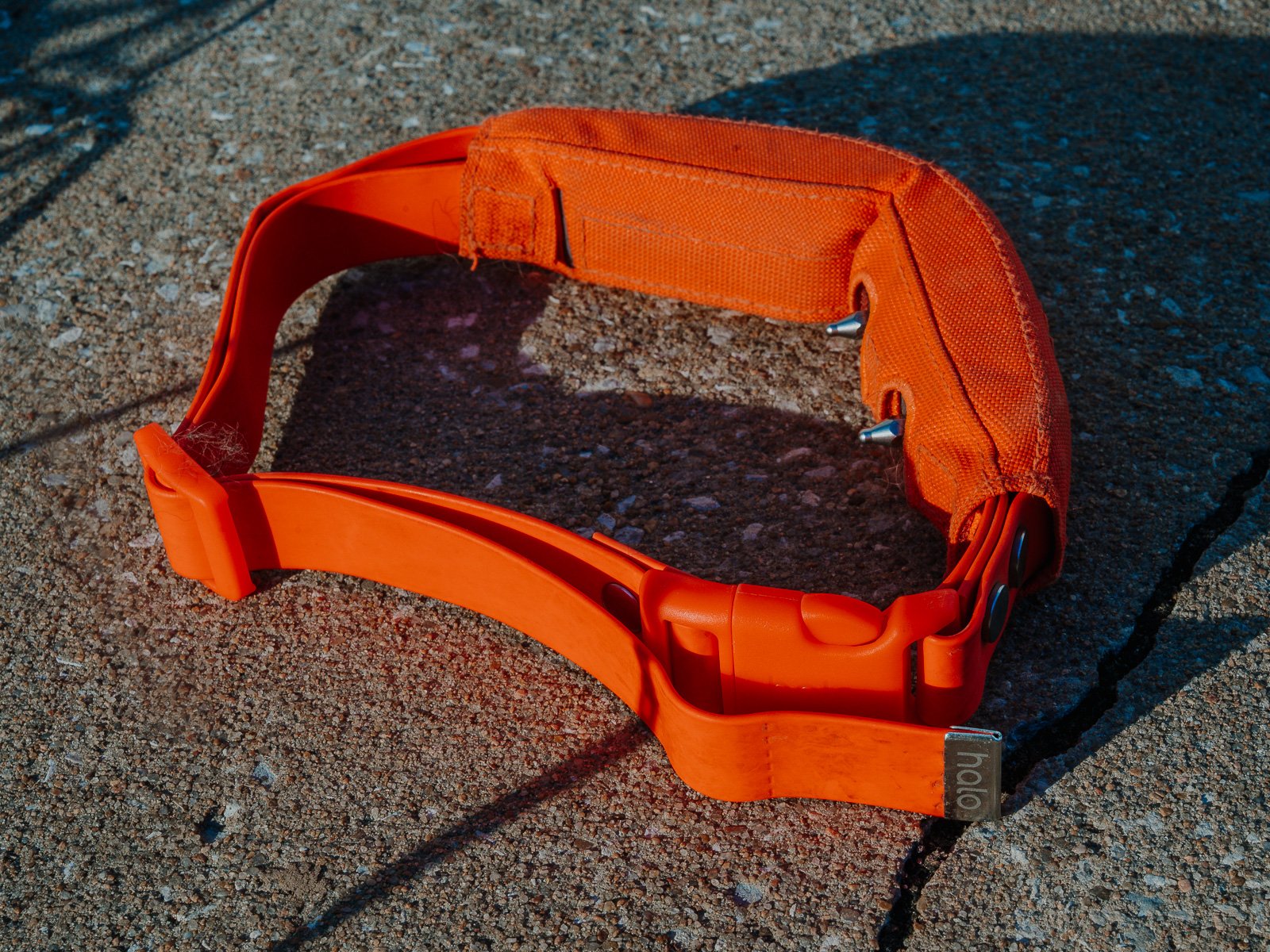
The Halo Collar 5 features a bright, easily recognizable design with a removable protective cover.
One of the biggest advantages of a GPS fence is being able to locate your dog if they escape. SpotOn, PetSafe, Halo, and SATELLAI all offer cellular-based tracking, allowing you to receive escape notifications and monitor your dog's location through their apps.
I'll admit, I almost skipped testing this feature altogether. I figured that as long as the collars had cellular service, live tracking would work pretty much the same across all four brands. I'm really glad I decided to test it, because the results were surprisingly different!
Since we have very poor cellular service at home, I drove into town where there was excellent coverage to give each collar a fair test. I tested escape notifications by crossing the virtual boundaries, then moved around town and eventually drove back home to see how accurately and consistently each collar updated its location.
SpotOn
SpotOn performed perfectly during my testing. Escape notifications came through near immediately, and the live tracking was consistently accurate. When I took the collar to a nearby store, SpotOn correctly displayed its location in the parking lot while some of the other systems were still showing outdated locations.
PetSafe Guardian GPS 2.0
PetSafe actually impressed me quite a bit! During my testing, escape notifications took approximately 15-30 seconds to arrive. That's noticeably slower than SpotOn and Halo, but the live tracking itself worked very well.
When I took the collar to the nearby store, PetSafe accurately displayed its location in the parking lot. It was right alongside SpotOn in that regard, while Halo and SATELLAI struggled to update.
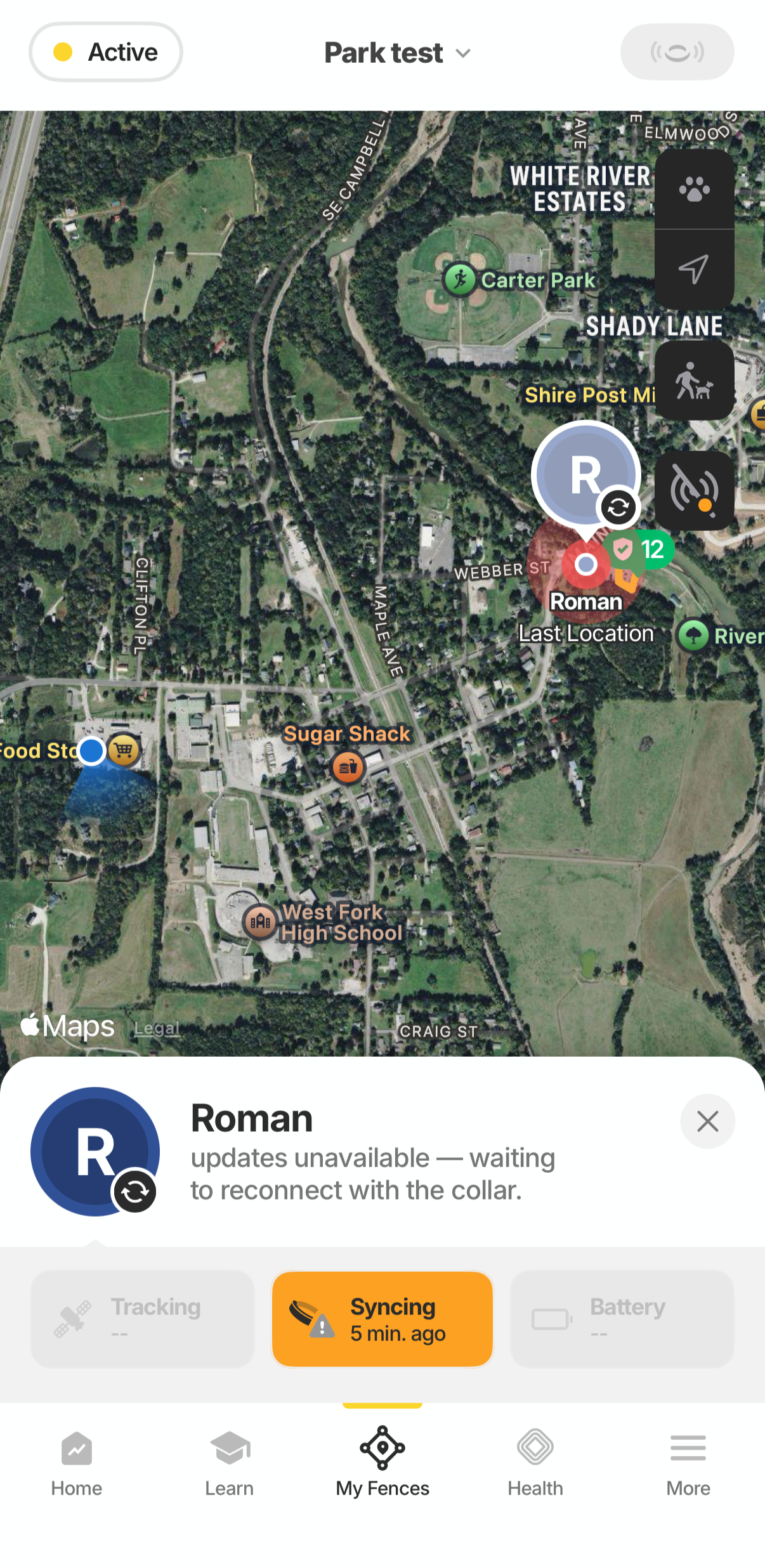
During testing, Halo struggled to update the collar's location, despite other GPS fences tracking successfully in the same area.
PetSafe's app doesn't offer as many tracking extras as some of the others, but based on my experience, the basic functionality works well. I'd certainly prefer faster escape notifications, but I was happy with the accuracy of its location tracking.
Halo Collar 5
Halo was a bit of a mixed bag. During my boundary testing, escape notifications came through promptly, just like SpotOn. That's great, especially when you want to know immediately if your dog has left the property.
Unfortunately, the actual live tracking was disappointing. When I took the collar to a nearby store, its location wasn't updating in the app. Even after fifteen minutes, Halo still hadn't displayed its current location, despite SpotOn and PetSafe successfully updating in the same area.
About 40 minutes later, Halo finally showed me traveling along the road on my way back home. So the tracking did eventually update, but the delay was concerning. If my dog had actually escaped, waiting that long for an accurate location could make finding him much more difficult.
Dogtra FieldGuard
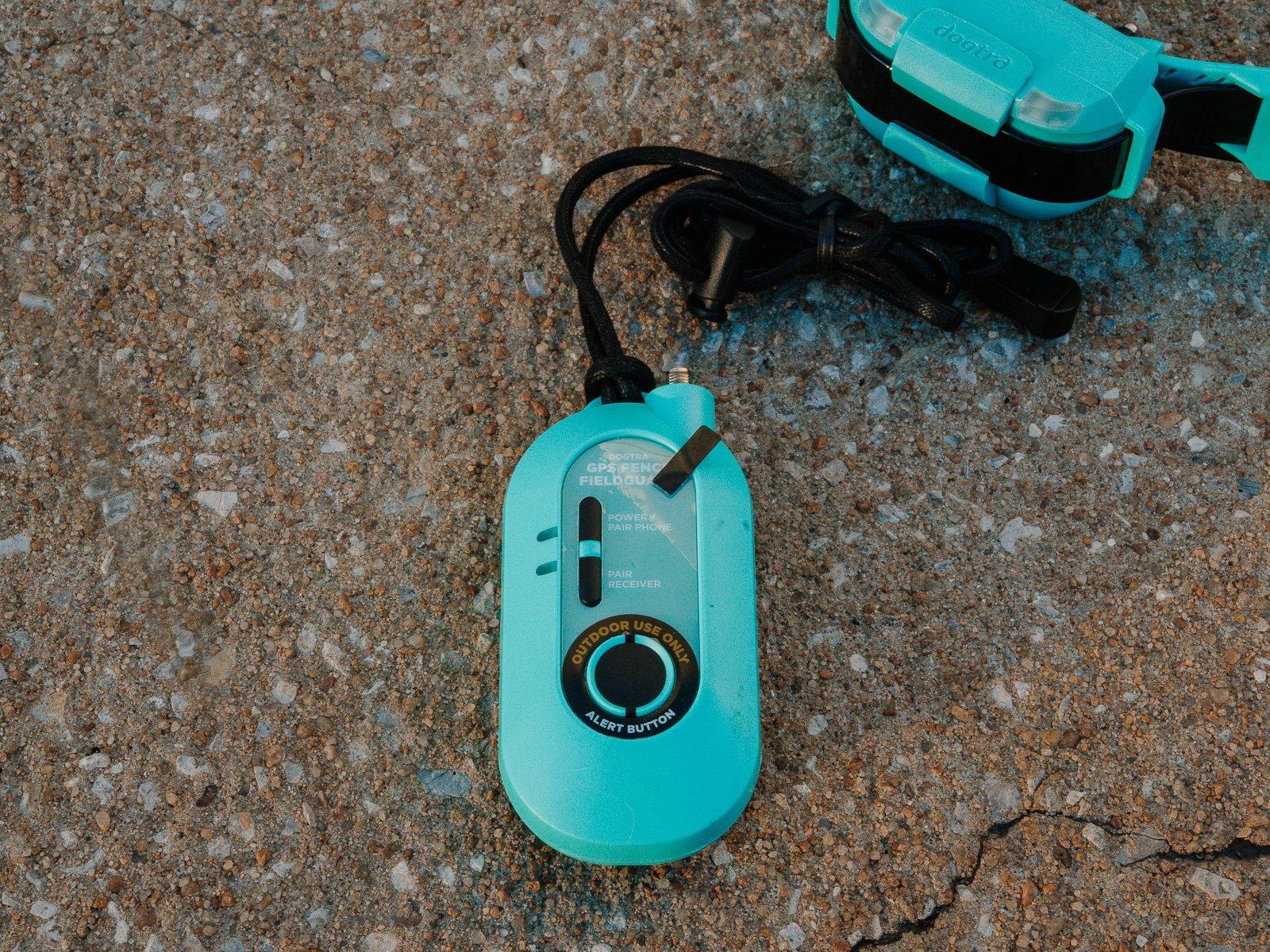
Dogtra works differently from the other four systems because it uses radio communication rather than cellular service. The collar communicates directly with the handheld remote, which can receive signals from up to three miles away outdoors. The remote then connects to your phone through Bluetooth, allowing you to view your dog's location in the app.
One important thing to understand is that your phone needs to stay within Bluetooth range of the remote (approximately 33 feet) to receive tracking information. If you're away from home and your dog escapes, you can't simply open the app and see their location. You'll need the remote with you, and you'll have to be within radio range of the collar.
Dogtra also offers escape alerts, and one thing I really like is that the handheld remote has its own alarm. If your dog crosses the primary boundary, the remote will sound an alarm even if your phone isn't connected, as long as it's within radio range of the collar. You can then connect the remote to your phone through Bluetooth to see your dog's live location in the app. The app can also send an escape notification when it's connected to the remote and running in the background.
I think this setup has some real advantages for rural properties without cell service, especially since there's no monthly tracking subscription. However, the advertised three-mile range is based on ideal outdoor conditions, and hills, trees, and other obstacles can reduce it. If your dog travels beyond that range, you won't be able to track them until you're close enough to reconnect.
It's worth mentioning that the GPS fence itself continues working even without your phone or remote connected. It's the tracking and escape notifications that depend on those connections.
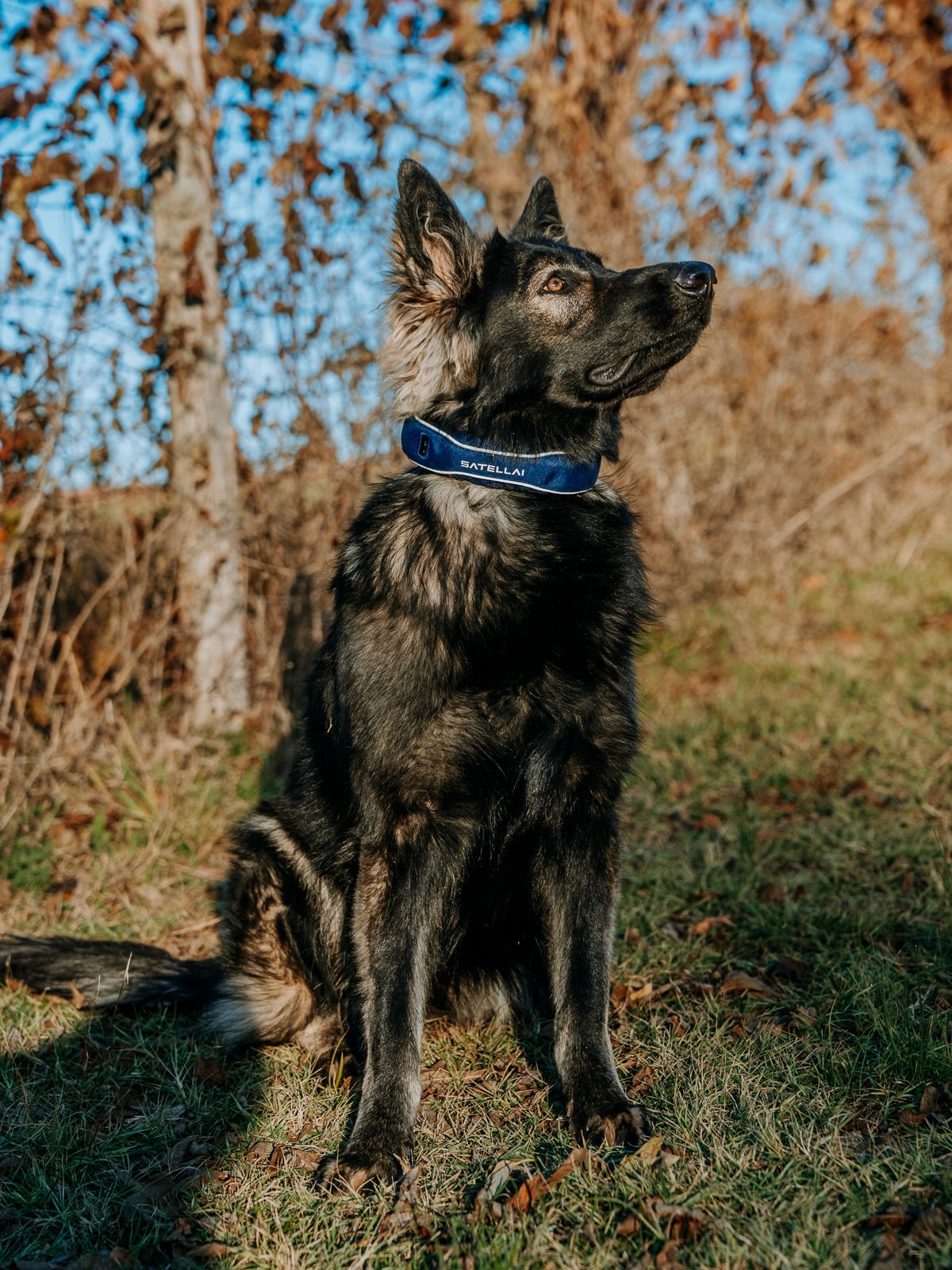
The SATELLAI GPS fence collar features a protective fabric cover and flexible silicone strap.
SATELLAI
Unfortunately, SATELLAI was the most frustrating system to test when it came to live tracking and escape notifications.
Whenever I created a new fence in a different location (miles away from the previous fence), the app would still show the collar inside the old fence. I spent about 20 minutes troubleshooting before finally getting it to display the correct location after turning off Bluetooth and resetting the collar. However, when I left that location, I stopped receiving live tracking updates altogether. The app continued showing the collar at the previous fence.
Escape notifications were also inconsistent. During my first test, the notification arrived about 20 seconds after crossing the boundary. During the next test, I received no escape notification at all, and I didn't receive a notification when the collar returned inside the fence either.
Overall, these issues make it difficult to trust SATELLAI to reliably alert you when your dog leaves the yard or help you locate them afterward. While I really like SATELLAI's app design and several of its features, these reliability issues are difficult to overlook.
Containment Reliability
For me, this is the most important part of a GPS fence. All the extra features in the world don't mean much if the collar can't consistently recognize where your dog is supposed to stay.
To test the collars, I walked across their virtual boundaries multiple times to see how reliably they delivered warnings and corrections. One thing I discovered pretty quickly was that gently swinging the collars as I walked, rather than holding them completely still, produced much more consistent results with some of the systems. I think this better simulates the movement of a dog wearing the collar, although it's obviously not quite the same as testing on an actual dog.
SpotOn
Of all five GPS fences, it's been the most consistent about exactly where warnings begin and end, with very little noticeable GPS drift. To give you an idea of how accurate it is, I can stand in one spot near the boundary and hold the collar in one outstretched hand. When it crosses the virtual fence, the warning starts almost immediately. If I move it to my other hand, back inside the boundary, the warning stops. I can repeat this over and over, and it responds in practically the same spot every time.
That's pretty impressive for a virtual fence! It's so consistent that it almost feels like there's a physical boundary there. I can predict where SpotOn is going to start warning, and I think that level of consistency is incredibly important when you're trusting a collar to contain your dog.
I also love how SpotOn delivers its warnings. As the dog approaches the boundary, the collar begins beeping repeatedly. If they continue past it, the beeping changes to a higher-pitched, more urgent tone. Rather than leaving several seconds of silence between warnings, SpotOn continues beeping until the dog returns inside the boundary. I think this does a better job of creating the illusion that there's a physical fence there, even though the dog can't see it. The sound stops almost immediately once they're back inside, which I think helps make it clear exactly where they're supposed to be.
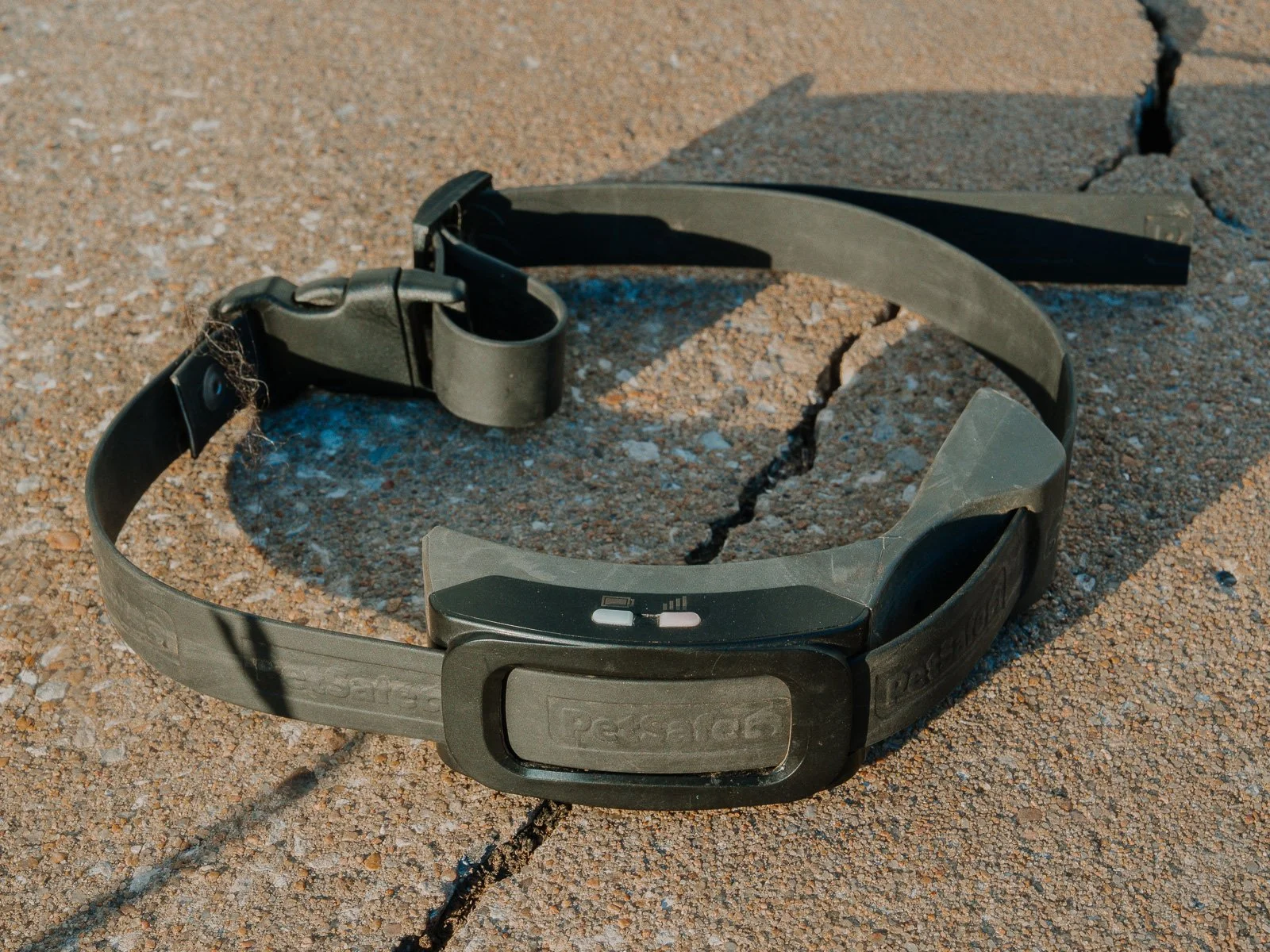
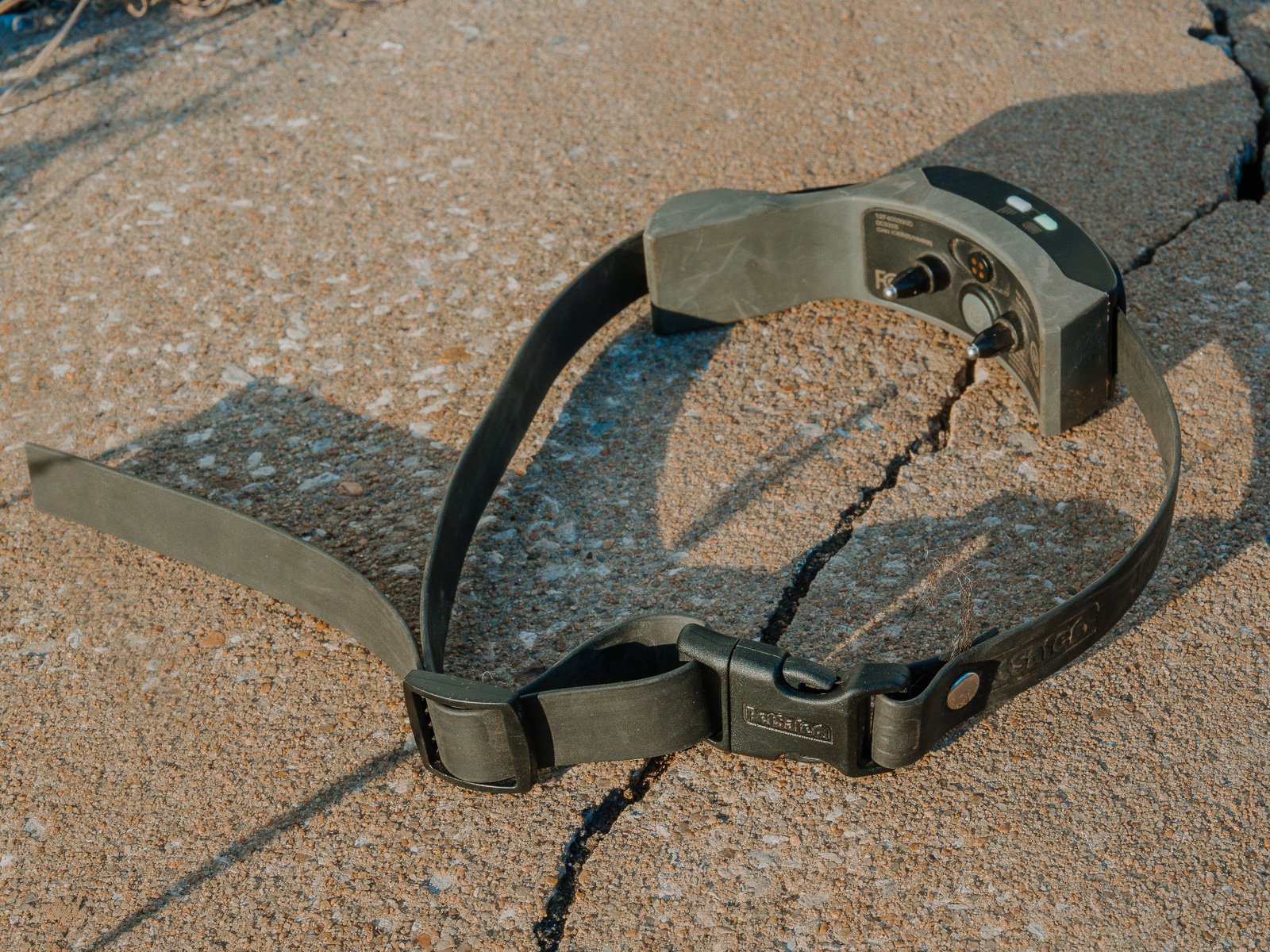
The PetSafe Guardian GPS 2.0 has a relatively lightweight design compared to several of the other collars.
PetSafe Guardian GPS 2.0
PetSafe has impressed me quite a bit with its containment reliability. The collar has been extremely consistent about where it starts delivering warnings, and I actually love the way those warnings work.
As soon as the collar reaches the boundary, it starts making a continuous, attention-grabbing beep. If the dog keeps going approximately five feet farther outside, vibration or static stimulation is added, depending on your settings. Similar to SpotOn, I prefer this approach over the pulsed warnings some other collars use. The beeping is persistent and pretty annoying, which is exactly what I'd want from something that's supposed to tell my dog to turn around!
PetSafe doesn't offer as many correction options as some of the other systems. You can choose between tone and vibration or adjustable static correction, with 10 levels of static stimulation, but I haven't found an option to change the warning sound itself. That doesn't particularly bother me since I already like the continuous tone it uses.
Halo Collar 5
Halo performed well during my boundary testing, with warnings consistently activating within a few feet of the line I'd drawn on the map. Once I crossed the boundary, the collar delivered warnings approximately every two seconds. I personally prefer more continuous beeping because I think the pauses can make the dog think they're back inside the fence when they're really not. But overall, Halo's warnings were consistent, and the system worked as intended.
Halo also offers flexibility when it comes to corrections. You can adjust the sounds and intensity for different stages, which is helpful if you want to customize how the collar communicates with your dog.
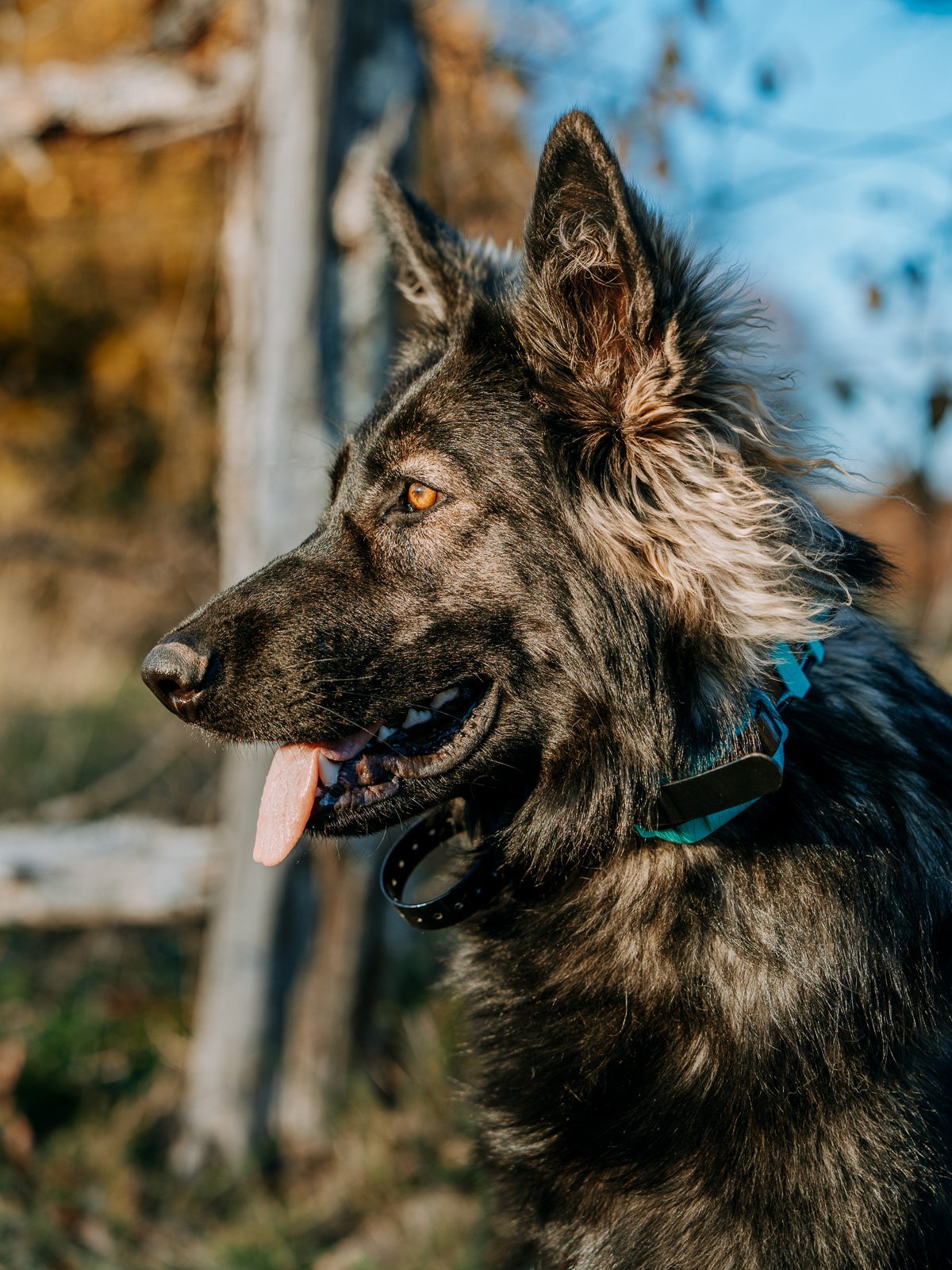
Runa wearing the Dogtra FieldGuard GPS fence collar during our boundary testing.
Dogtra FieldGuard
Dogtra also performed well, consistently responding within approximately three feet of the boundary I'd drawn on the map. There was very little variation between passes, which was encouraging.
One feature I really like is Dogtra's layered containment system. In addition to the warning zone, you have your primary fence and two backup fences that can extend much farther outside the original boundary. The first backup fence can be placed up to 50 yards beyond the primary fence, while the second can extend up to 300 yards. You can adjust how far out each one sits and assign different correction settings to each boundary.
Essentially, you're creating three layers of fencing, each with its own correction settings. If your dog ignores the first boundary and keeps going, there are two additional opportunities for the collar to encourage them to turn around. I particularly like that these backup fences can be placed much farther out rather than being limited to just a few feet beyond the original boundary.
Dogtra also offers a lot of control over correction levels. The FieldGuard has static stimulation settings from 0–100, a much wider numerical range than the other GPS fences I've tested. That doesn't necessarily mean the strongest correction is more powerful than the others, but it does give you plenty of adjustment options when finding the appropriate level for your dog.
SATELLAI
SATELLAI performed well during my initial boundary tests in an open area. The collar consistently started delivering warnings within a few feet of the line I'd drawn on the map, with very little variation between tests. The problem I discovered later wasn't how accurately the collar responded to a fence, but whether the fence shown in the app was actually the one the collar was using.
You can choose between sound, vibration, and static stimulation, with separate settings for approaching the boundary, crossing it, and escaping more than 100 meters beyond it. There are three preset warning sounds to choose from, or you can record your own audio. I like the custom recording option, especially if you want to use a familiar voice command.
For my testing, I set the approaching-boundary warning to the spoken "Go home" command and the boundary-breach warning to a whistle. Once I crossed the boundary, the collar repeated its warnings approximately every 3–5 seconds until I returned inside. Again, I really don't like these pauses between warnings. I think they can be confusing to the dog when there's a delay instead of continuous warnings. However, during those initial tests, the boundary detection was consistent.
More importantly, as I mentioned in the app section, editing or replacing a fence didn't always update the collar's actual boundary. It kept correcting based on the old fence until I unlinked and relinked Roman. Even though the original boundary tests looked good, that issue is a major concern for me when it comes to containment reliability.
Collar Design
SpotOn
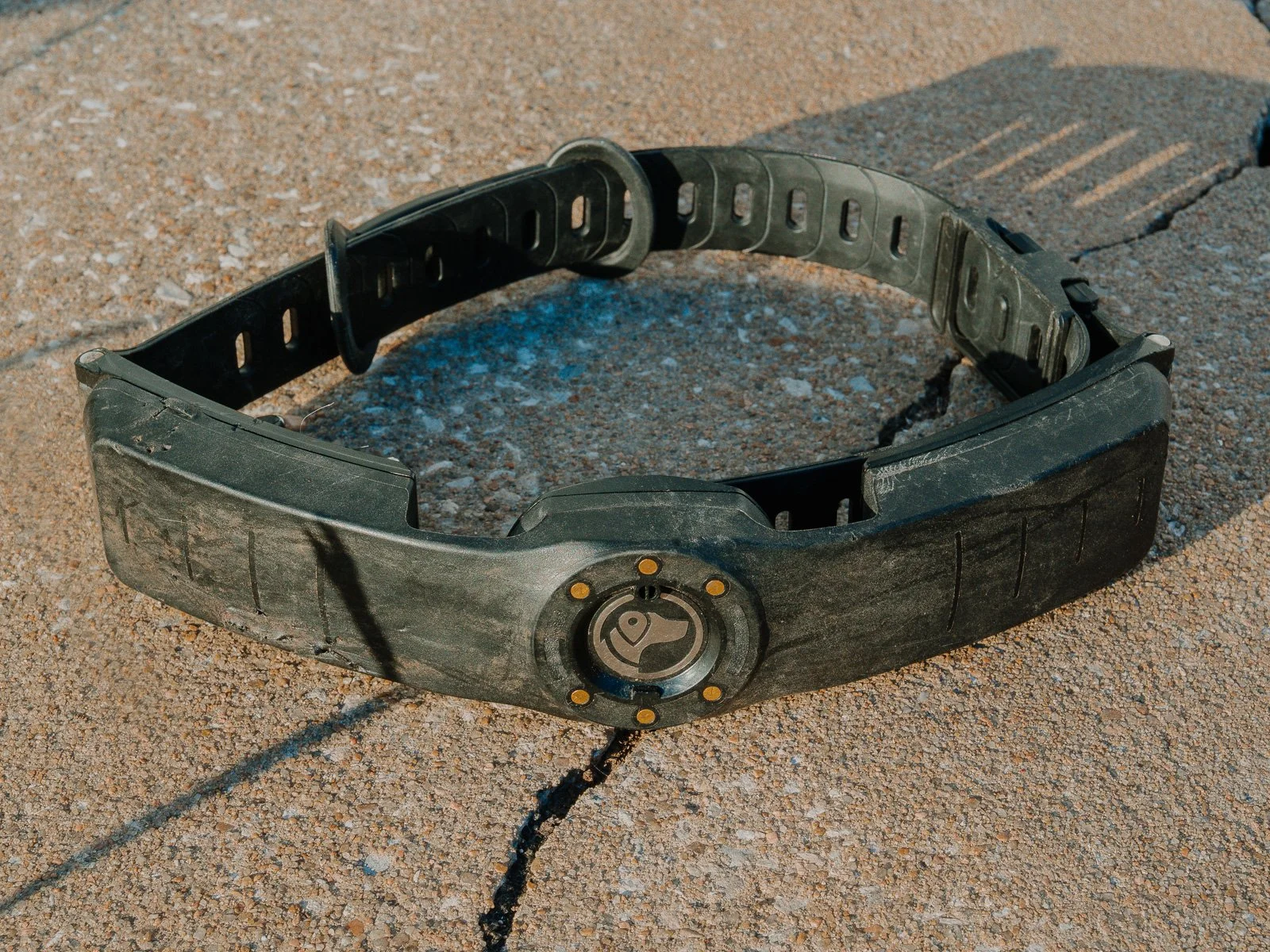
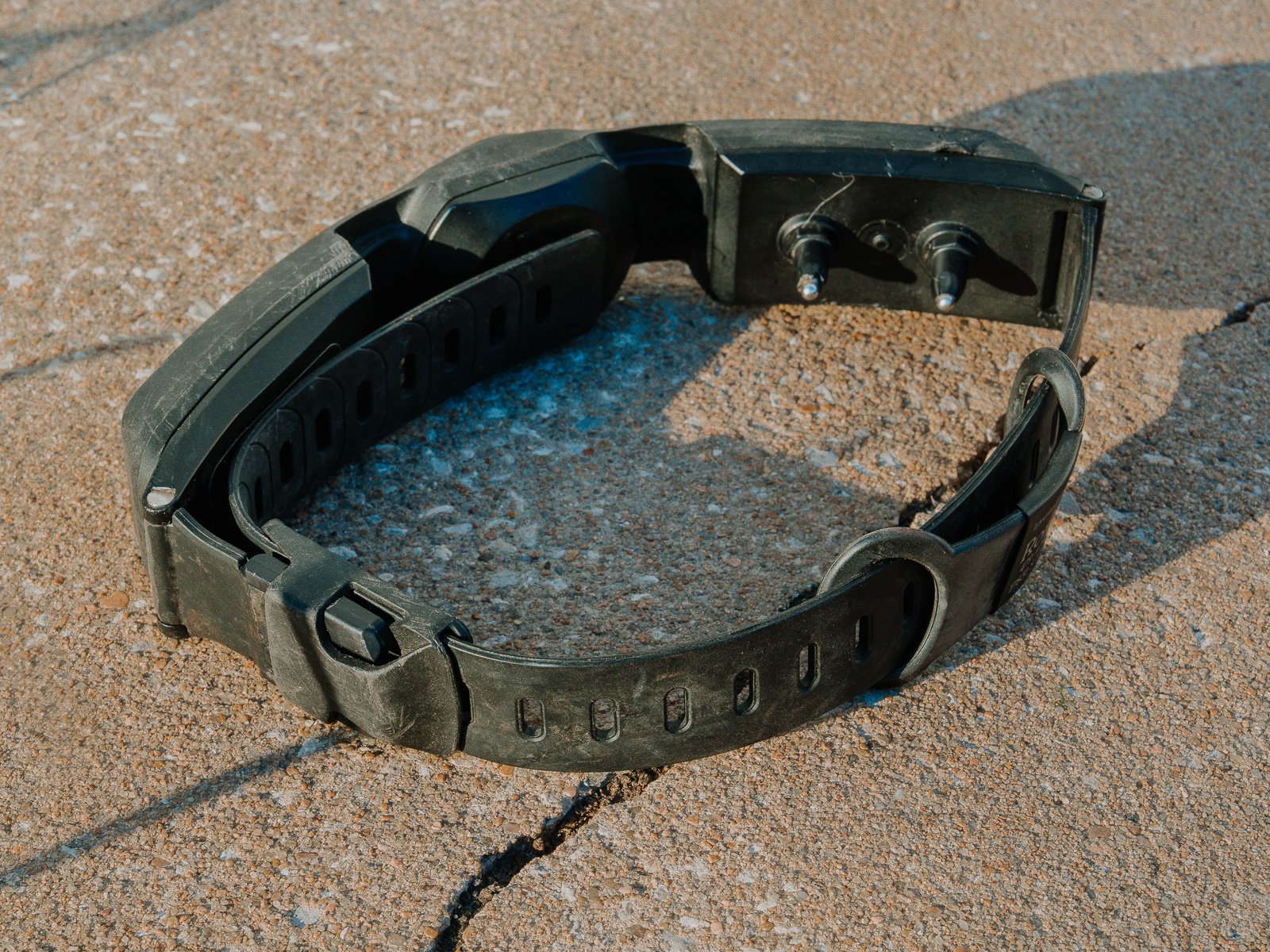
Of all five collars, SpotOn feels the most heavy-duty. Everything about it feels sturdy, from the thick strap to the buckles and hardware. It's a great design, and I appreciate that individual components can be replaced if something breaks rather than having to replace the entire collar.
The tradeoff is its weight. SpotOn is definitely one of the heavier GPS collars, and although the company recommends it for dogs weighing at least 15 pounds, I personally think it's better suited to medium and large dogs. For a big, active dog like Roman, though, I prefer the more larger, solid construction.
SpotOn has an IP67 water-resistance rating, making it well-suited for everyday outdoor use.
Black Friday Sale: Get $150 Off
PetSafe Guardian GPS 2.0
PetSafe is one of the lighter collars I've tested, which could make it a good option for smaller dogs. The company recommends it for dogs weighing at least 10 pounds.
The strap is pretty thin and lightweight, and the overall construction feels flimsy compared the other collars. That's not necessarily a negative, especially for smaller dogs that might benefit from a lighter collar, but it's worth considering if you're looking for something particularly heavy-duty.
PetSafe advertises the Guardian GPS 2.0 as waterproof, although I haven't found a specific IP rating listed.
Halo Collar 5
Halo has a nice overall design and comes in several fun colors. The electronic unit sits inside a removable fabric cover called the Pro Case, which is also available in different colors.
The collar itself is a little bulky, but nothing excessive. Halo recommends it for dogs weighing at least 10 pounds, although I personally think its size and design are better suited to medium and larger dogs. The strap isn't quite as substantial as some of the heavier-duty options, but I like the overall appearance.
Halo has an IP67 water-resistance rating for outdoor use.
Dogtra FieldGuard
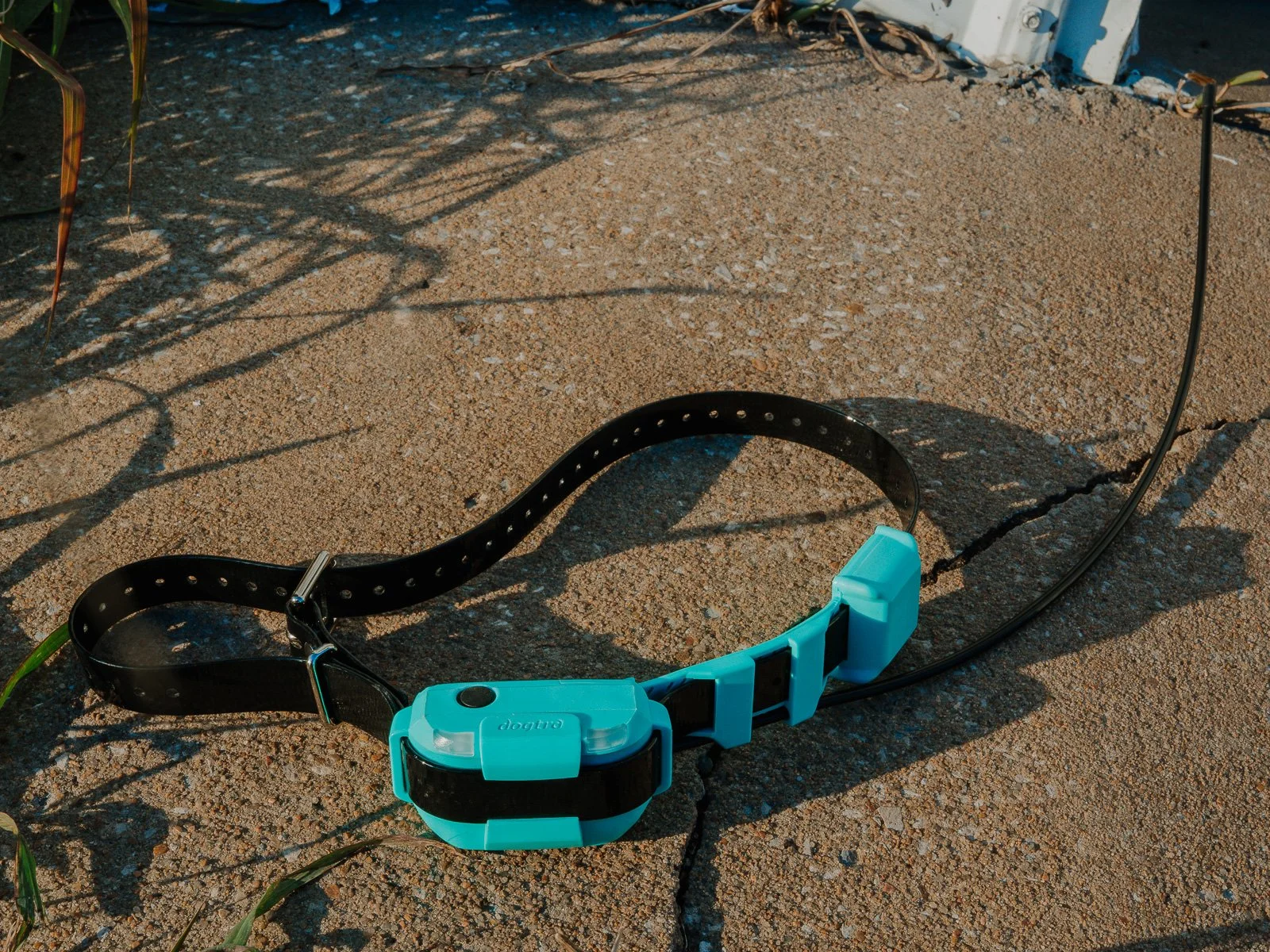
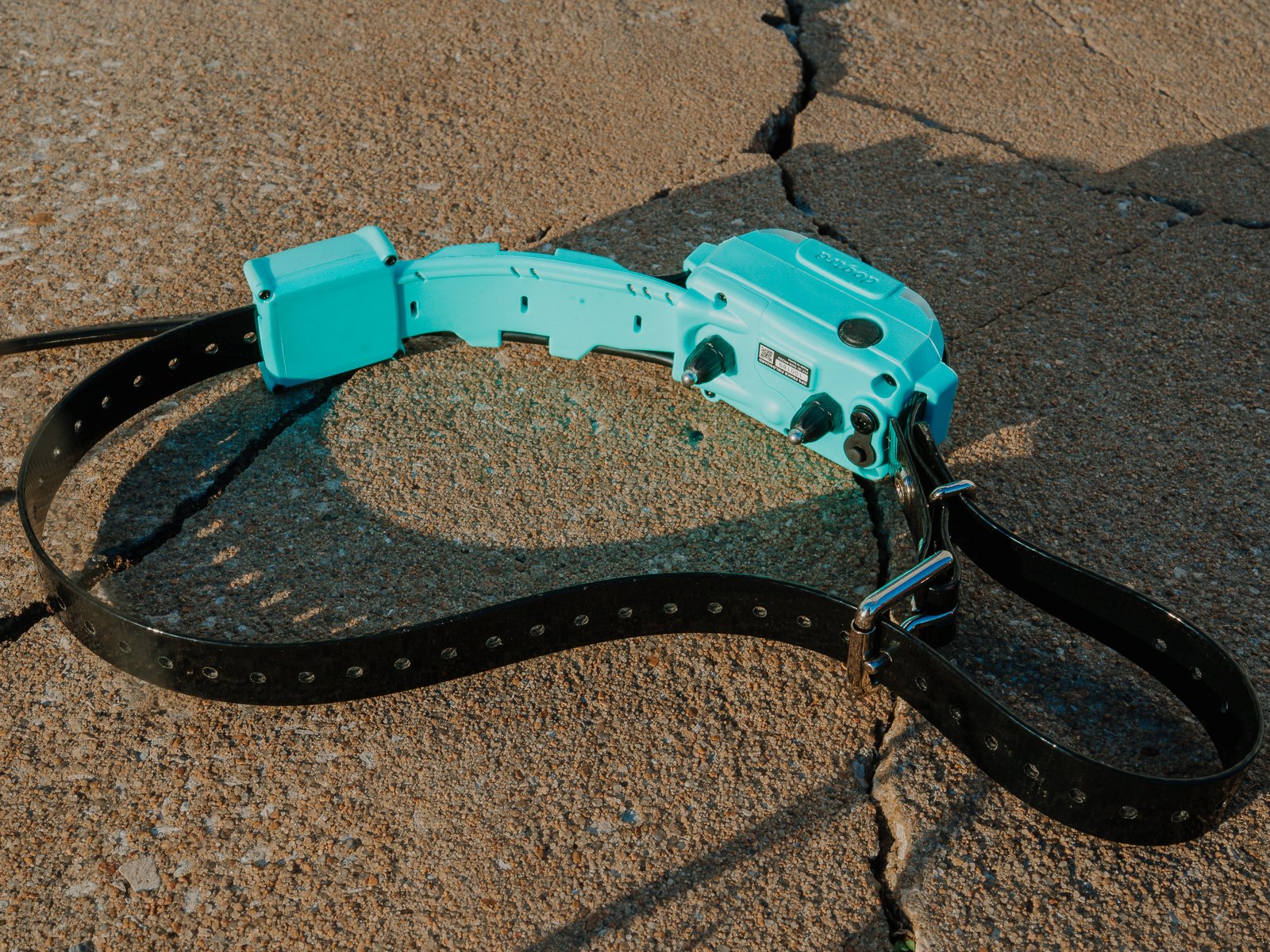
I've been using Dogtra's traditional e-collars for nearly 10 years, so I'm pretty familiar with the quality of their equipment. The FieldGuard receiver and handheld remote have that same substantial, high-end feel I've come to expect from Dogtra.
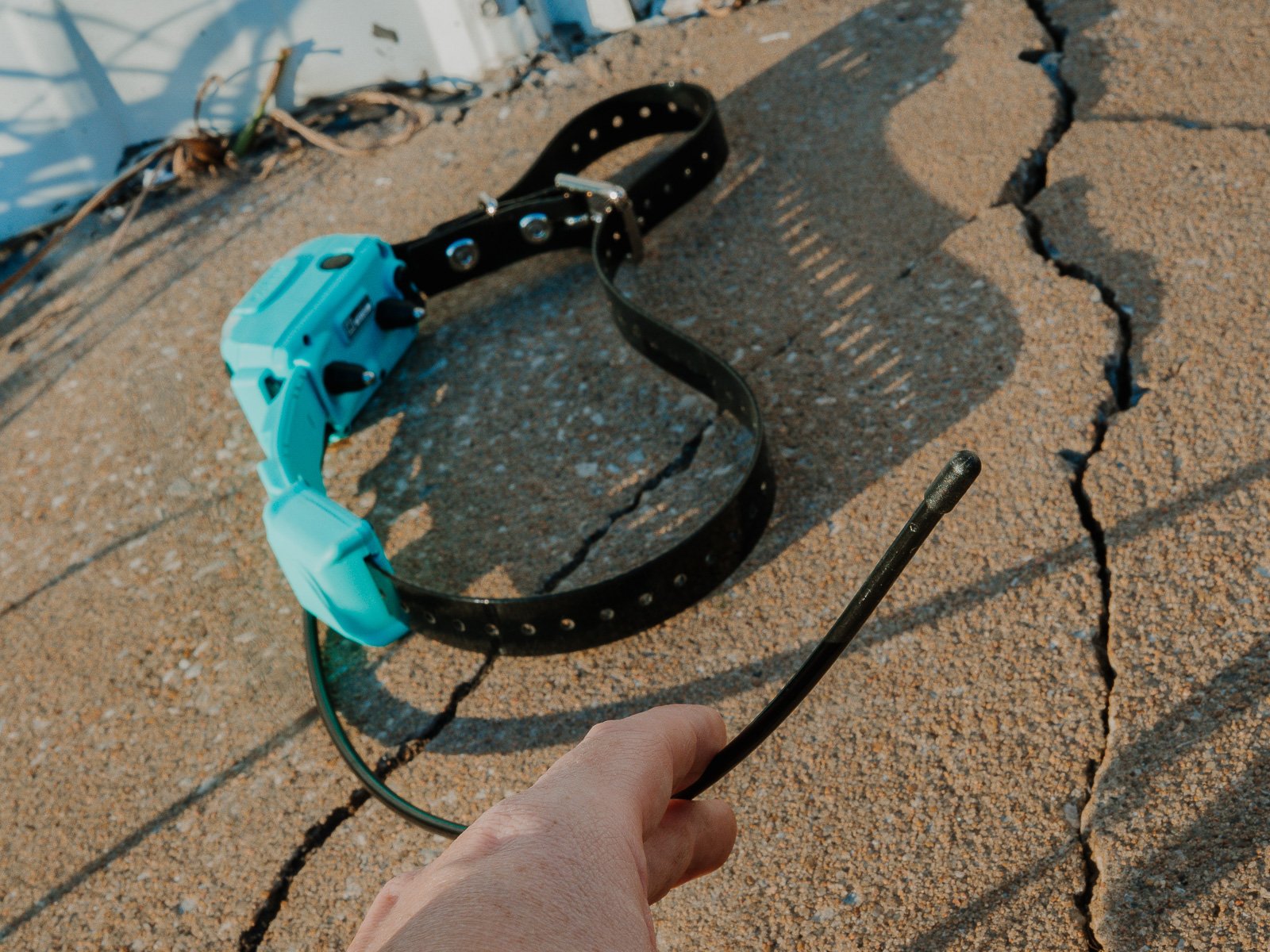
The collar strap is thinner than I expected, and my biggest complaint about the design is definitely the antenna. It's unusually long and flexible, extending well beyond the collar itself. I could see it being awkward for dogs running through woods or thick brush, where it might catch on vegetation. I haven't personally had that happen, but it's something I'd be concerned about.
Dogtra recommends the FieldGuard for dogs weighing at least 25 pounds, with neck sizes starting at approximately 11 inches. It uses a ¾-inch BioThane strap, which is easy to clean and practical for outdoor use, and the receiver has an IPX9K waterproof rating.
Overall, I'm impressed with the quality of the electronics. I just wish the strap were a little more substantial and the antenna weren't quite so long.
SATELLAI
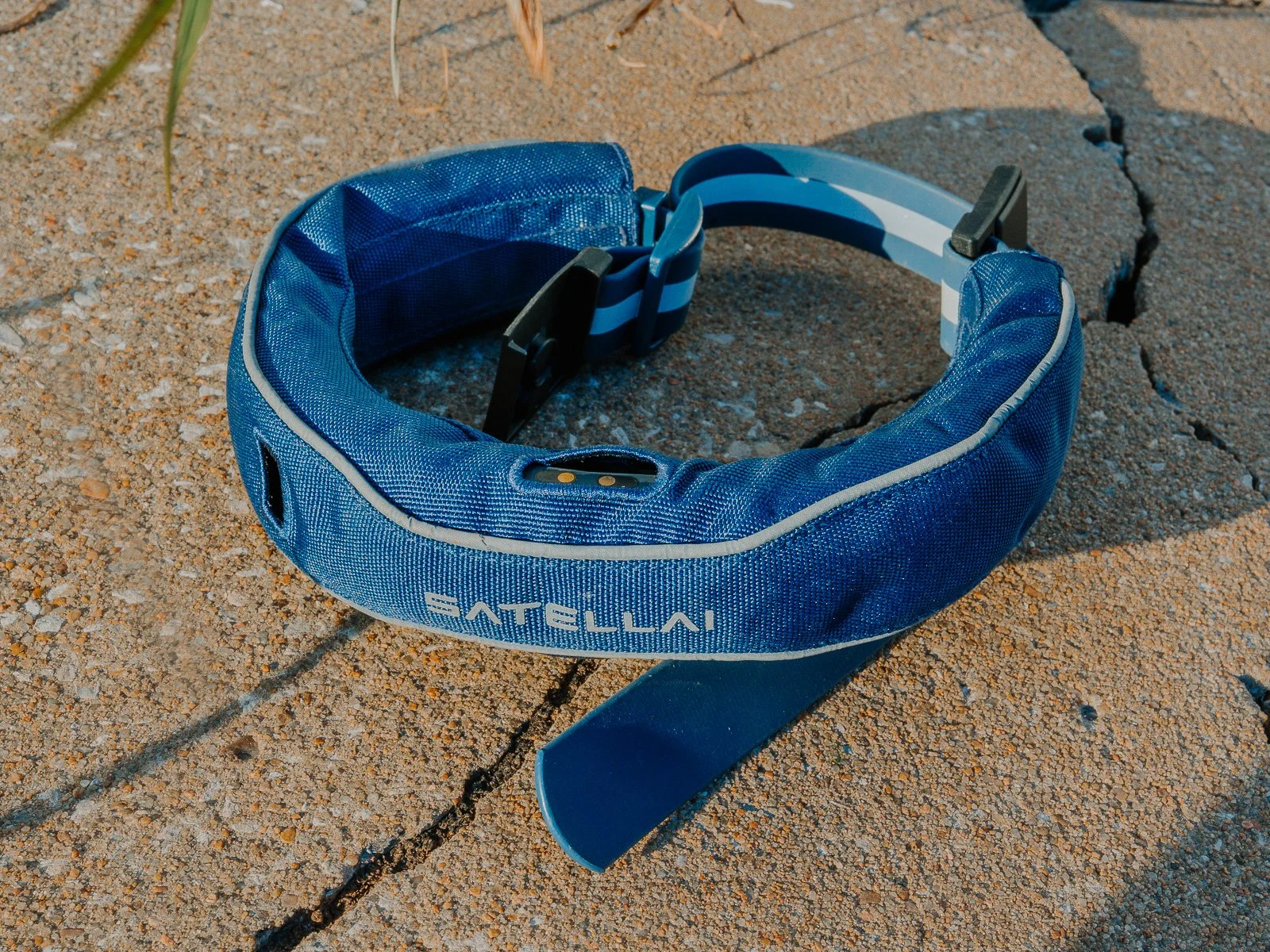
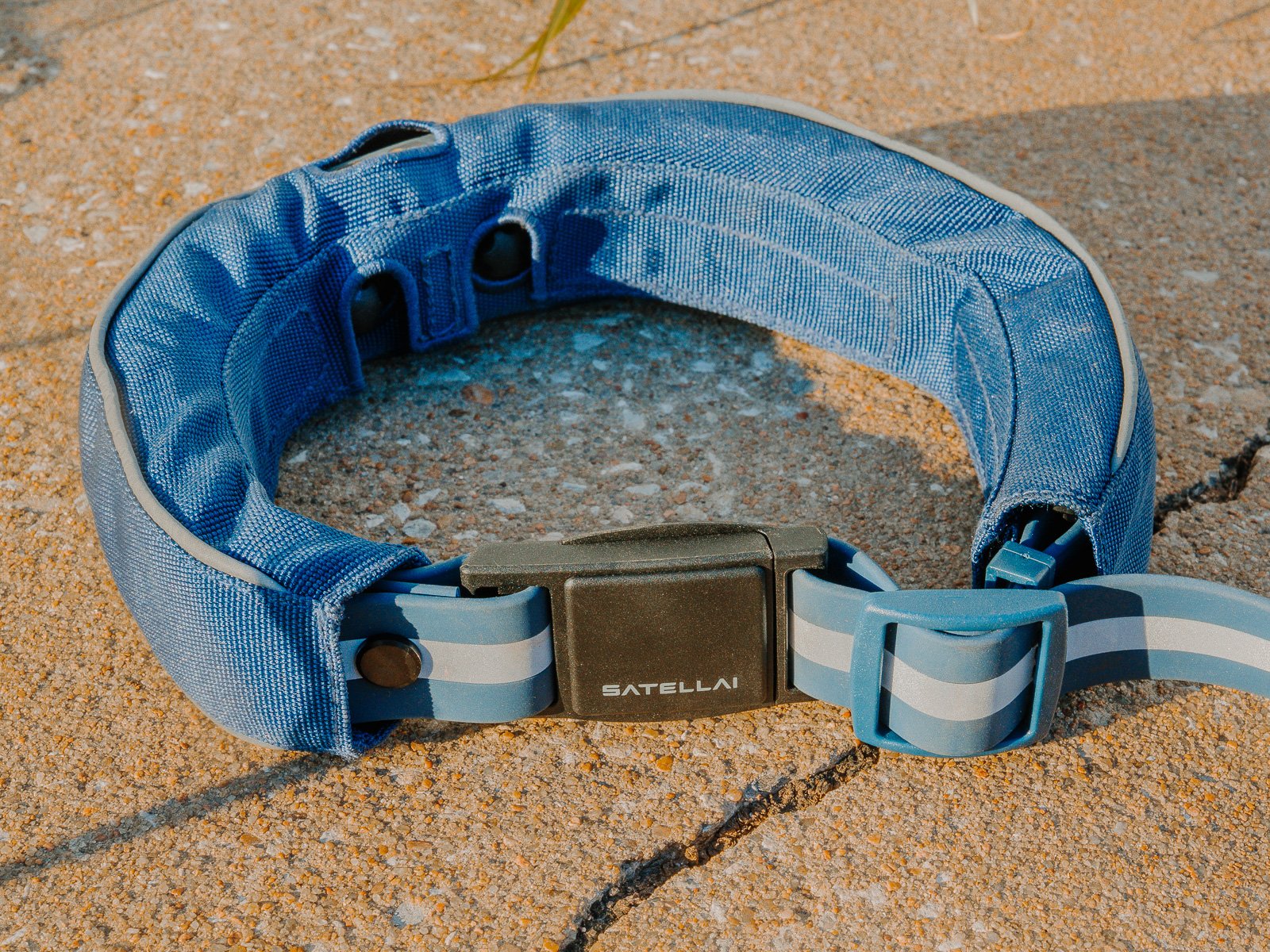
I like SATELLAI's overall collar design. It comes in several fun colors and has a removable protective cover. Like Halo, it's a little bulky, but nothing excessive, and I think it's a good size for medium to large dogs.
The strap is made from flexible silicone, and one thing that makes SATELLAI a little different is its magnetic buckle. I'll admit, it took me a while to figure out how to open it! But once I did, I actually really liked the design. It feels secure, and I think it might be less prone to breaking than a traditional plastic buckle.
SATELLAI has an IP68 waterproof rating, making it suitable for everyday outdoor activities, including swimming.
Battery Life
One thing people might not realize about GPS fences is just how often they need to be charged! If you're used to traditional e-collars that can go days or even weeks between charges, GPS fence battery life might be a bit of a surprise. These collars are constantly using GPS to monitor your dog's location, and many also use cellular connections for tracking and notifications. All of that uses power, so battery life can be significantly shorter than you'd expect.
Fortunately, some GPS collars can recharge in as little as an hour! If your dog needs to wear their fence all day, you can bring them inside or keep them somewhere securely contained while the collar charges. Another option, if it's within your budget, is to purchase a second compatible collar and rotate between them.
For this comparison, I've included both the manufacturers' advertised battery life and what I've actually experienced. One important thing to know about my results: We live in a rural area with little to no cellular service. Because of this, my collars were constantly trying to connect to cell service, which causes the battery to drain faster. Actual battery life for you will likely be several hours longer assuming you have cell service where you set up the fence.
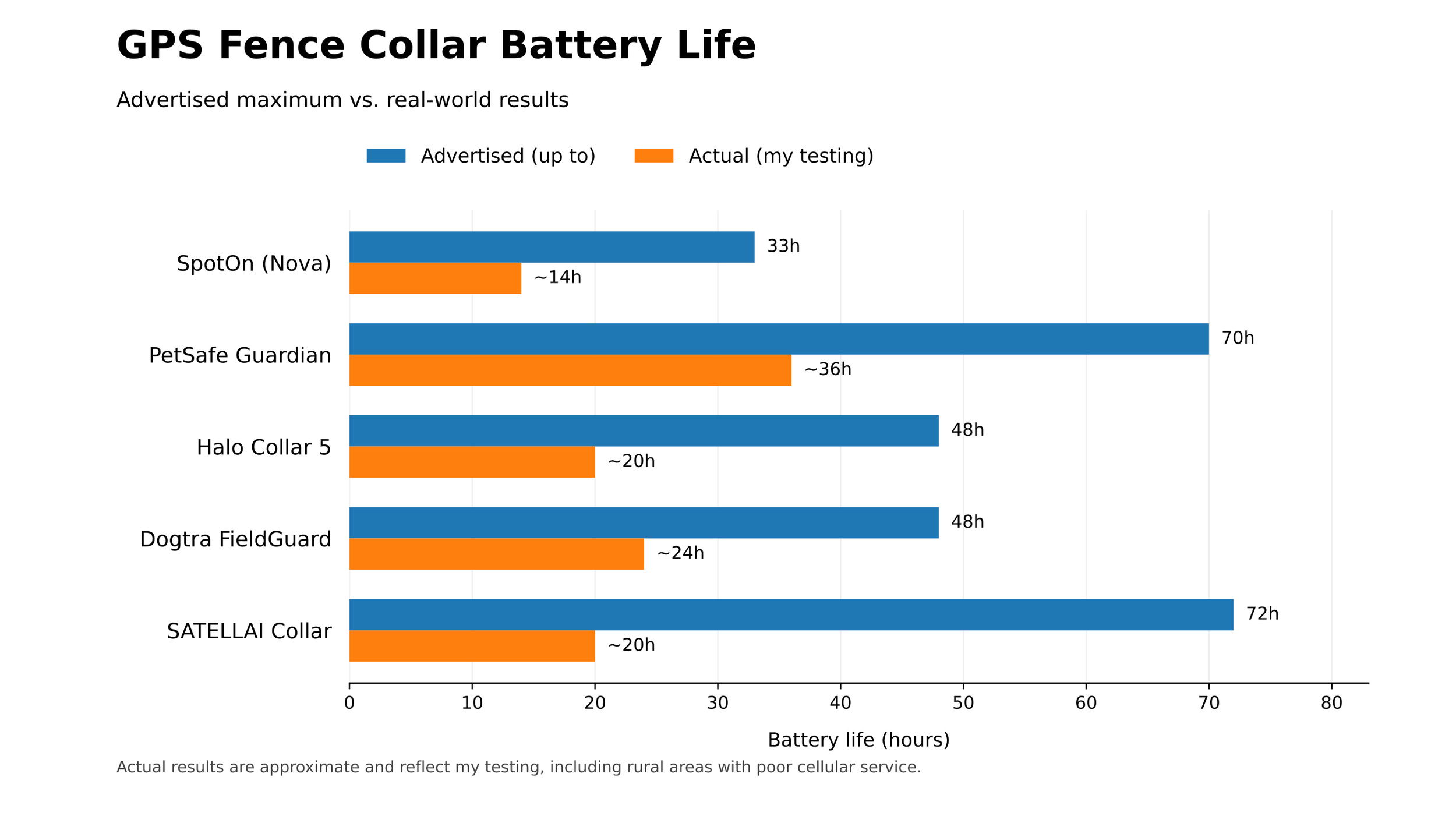
Advertised battery life reflects manufacturer claims, except for Dogtra's retailer-listed figure. Actual results are based on my own use and may vary depending on cellular coverage, settings, and other conditions.
Extended Battery Life Modes
Some GPS fences offer settings to help stretch the battery a little longer, although there can be tradeoffs depending on which features you use. SpotOn's Extended Battery Life Mode made a pretty big difference for us. With it turned off, our collar averages around 14 hours per charge. With it enabled, that increases to approximately 20 hours.
There is one drawback I've experienced, though. Roman occasionally escapes in the middle of the night, and on one occasion, SpotOn stopped tracking him automatically after four hours because Extended Mode was enabled. When I woke up and realized he was gone, I couldn't manually restart tracking through the app. That was incredibly frustrating because I had no way to see where he was.
I definitely appreciate the extra battery life, but I wish Extended Mode didn't limit escape tracking this way. It's something I'd keep in mind, especially if your dog might escape when you're not around to immediately respond to a notification.
My Overall Thoughts & Recommendations
After comparing these five GPS fences, there are three I'd personally be most likely to recommend: SpotOn, PetSafe, and Dogtra FieldGuard. They each appeal to me for different reasons, and I think the best choice really comes down to your property, budget, and whether you have reliable cellular service.
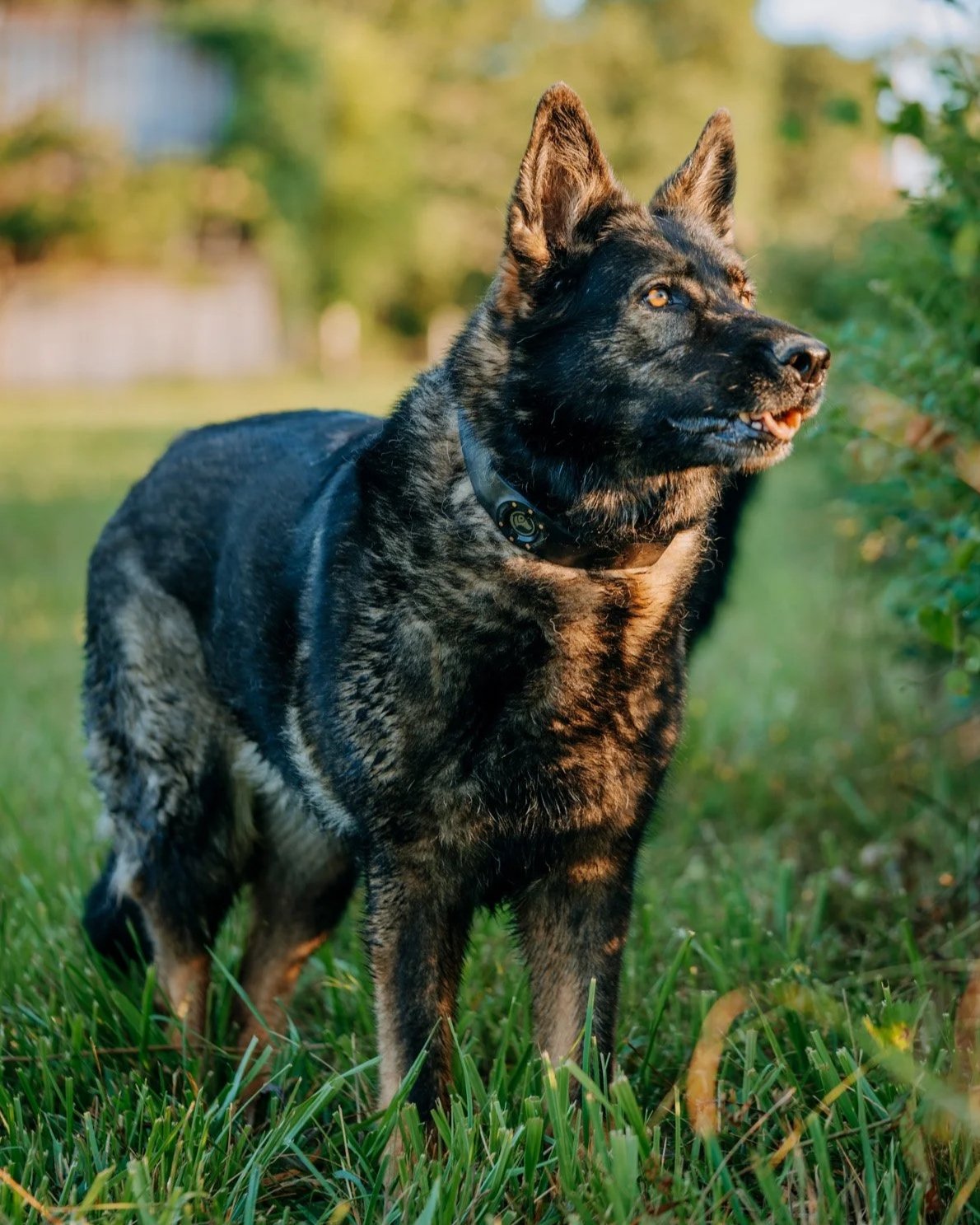
Brenna wearing the SpotOn Nova GPS fence collar.
Best Overall: SpotOn
SpotOn is still my favorite GPS fence overall. After years of using it with Roman and comparing it against the others, it's the system I feel most confident relying on. The consistency of its boundary detection is the biggest reason, but I also love the app, the heavy-duty construction, and the fact that I don't have to pay a subscription just to use the fence.
That doesn't mean it's perfect. It's expensive, battery life has been frustrating for us, and I have some concerns about the limitations of Extended Battery Life Mode. Even with those drawbacks, the things SpotOn does well are the things that matter most to me in a GPS fence.
Best Budget-Friendly Option: PetSafe Guardian GPS 2.0
PetSafe has probably been one of the more pleasant surprises of this comparison. For considerably less money than SpotOn, you're getting a fence that has been extremely consistent during my testing, and I really like its continuous warning tone.
The app is basic, and the collar honestly feels quite flimsy and cheap, but neither would necessarily be a dealbreaker for me. If you're looking for something straightforward that performs well without spending nearly $1,000, I think PetSafe is a great option. Just remember that it does require a $9.99 subscription.
Best for Properties Without Reliable Cell Service: Dogtra FieldGuard
Dogtra would be one of my top choices for someone living somewhere without reliable cellular coverage. Its radio-based tracking system allows you to locate your dog and receive escape alerts without needing cell service, provided the collar and handheld remote are within range and your phone is connected to the remote.
I was also happy with its boundary consistency, and I particularly like the adjustable backup fences and the amount of control it offers over corrections. The app and remote take a little more effort to learn, and I'm not a big fan of the long antenna, but those are tradeoffs I'd be willing to consider for a system that doesn't depend on cellular connectivity or a monthly subscription. Just remember that tracking is limited to the remote's communication range, which can be reduced by hills, trees, and other obstacles.
Halo and SATELLAI have some features I genuinely like, too, but my testing made me less enthusiastic about recommending them. Halo's boundary warnings and escape alerts were great, yet its live location failed to update during my store test. SATELLAI's original boundary tests went well, but the fence-sync problems, missing notifications, and outdated tracking locations are much harder to overlook.
Ultimately, I think containment reliability matters more than having the fanciest app or the longest list of additional features. SpotOn remains my personal favorite, PetSafe offers an appealing alternative at a much lower price, and Dogtra has some real advantages for properties without reliable cell service. Here's my quick takeaway on each collar after comparing them side by side.
Each Collar at a Glance
SpotOn
In my opinion, SpotOn is the best GPS fence collar on the market today. It has the sturdiest collar design, an incredibly easy-to-navigate app, prompt escape alerts, excellent live tracking, and the most consistent boundary detection of any collar I've tested. Cellular service isn't required for containment, only for features like escape notifications and live tracking. Its biggest drawbacks are the $999 price tag and relatively short battery life, but I personally think those trade-offs are worth it for such a reliable system.
Heavy duty, sturdy collar design
Most reliable virtual fence
Excellent escape alerts and live tracking (with subscription)
Subscription not required
Most expensive GPS collars ($999)
Large collar (better for large dogs)
Shorter battery life
Black Friday Sale: Get $150 Off
PetSafe Guardian GPS 2.0
Honestly, I was surprised that PetSafe ended up being my second favorite GPS fence collar overall! The collar itself feels a little flimsy, and the app is very basic, but the containment reliability, live tracking, and escape alerts all performed well during my testing. It's also one of the more affordable options at $449.99. For the price, I think PetSafe offers excellent value.
Reliable boundary detection and containment
Excellent live tracking
Simple, easy-to-use app
Affordable compared to other GPS fences ($449.99)
Lightweight, but somewhat flimsy collar design (which could be a positive for small dogs)
Subscription required
Black Friday Sale: Get 20% Off
Halo Collar 5
Halo is one I expected to be fantastic, and in some ways it was! The app is excellent, and I love the training resources they provide to help new users get started. Unfortunately, there are some significant drawbacks that make it difficult for me to justify the $599 price tag. I'm not a fan of the pulsed corrections, and I experienced significant delays with live tracking. Maybe a future generation will address these issues, but based on my experience, I wouldn't recommend the Halo Collar 5.
Consistent boundary detection
Excellent app with plenty of training resources
Highly customizable warnings and corrections
Prompt escape notifications
Unreliable live tracking during my testing
Not a fan of pulsed corrections
Subscription required
Black Friday Sale: Get 30% Off
Dogtra FieldGuard
At $429.99 with no monthly subscription, Dogtra is a great option for those without cell service, but if you have even spotty coverage, I'd personally choose another system. The collar and remote have the high-quality construction I've come to expect from Dogtra, although I really dislike the oversized antenna. Boundary detection was consistent, and I love the adjustable backup fence layers. However, the app feels outdated and isn't as user-friendly as the others. Radio tracking works well, but there's a significant limitation: the remote must stay within Bluetooth range of your phone for tracking updates, and your dog must be within the remote's advertised range of up to three miles, potentially less in wooded or hilly terrain.
Reliable boundary detection and containment
No subscription or cellular service required
Two adjustable backup fences
Tracking limited to about 3 miles
Phone tracking and app notifications require a Bluetooth connection to the remote.
More complicated app and remote setup
Very long antenna from collar
Discount: Use code JAKOBA for 5% off
SATELLAI
I wouldn't recommend SATELLAI based on my testing. I like the app and overall collar design, and my initial boundary testing went well. However, I repeatedly had issues getting new or updated fences to sync properly with the collar. I also had to reset the collar just to get its location to update, and even then, live tracking was unreliable. Escape notifications were inconsistent, too, with some arriving late and others not arriving at all. Overall, at $499.99, I think SATELLAI would likely leave you more frustrated than anything.
Clean, easy-to-use app with great features
Consistent boundary detection during initial testing
Fence changes didn't sync with the collar
Unreliable live tracking and escape notifications
Not a fan of pauses between corrections
Subscription required
